Showing posts with label Sololá. Show all posts

Monday, October 31, 2011

This Day in History


One year ago today, I got up at 5 in Sumpango, stuffed my cat in a tote bag, and stood in the back of  a packed bus for over three hours with my training host parents as they accompanied me over the crazily curving roads to my site in Sololá. I had just recovered from a violent food-borne illness, and was both eager and anxious to start the chapter of Peace Corps Volunteer as I left behind my status as a Peace Corps Trainee. 

Since then I have lived in four different housing situations with two additional host families in two departments and have spent over 150 hours studying two different Mayan languages.  I have worked in a school, a health post, in homes, kitchens, gardens, and a cooperative.  I have been in turns lonely, bored, eager, cynical, frightened, euphoric, determined, content, pessimistic, apathetic, inspired, and a host of other states of being.  I have improved my tortilla-making skills, my cockroach killing techniques, and my ability to endure being the center of attention.  I have made new friends in my Guatemalan communities, have strengthened Volunteer friendships, and been incredibly supported by friends and family from home through calls, cards, and even some visitors.

It is staggering to know that I have [only / a whole] year left.  
What the next year of service holds, I won’t pretend to guess.  
There’s only one way to find out!

Monday, May 30, 2011

Moving Day: A Tale in Three Acts

Prologue:
In the week leading up to my move from Sololá to Alta Verapaz, my (ridiculously wonderful) new site mate and I had gone through the wringer trying to figure out how to get me and my belongings halfway across Guatemala. We ended up hiring a truck owned by one of the asocios (members) of my host Co-operative, but we didn’t know how big it was. The description she had from those who knew was that it was “a little bigger” than a Mazda pickup truck (essentially a flete, which was our other option). I prioritized the furniture I have, figuring out what I might have to leave behind… putting my bed, refrigerator, and stove first, and really hoping to get my dresser in after that. I stacked together the best of my dishes and shoved my clothes back into the suitcase and backpack I brought with me from the US, and hoped for the best.

The truck that met me on Thursday night erased all need for such things. I could have easily fit twice what I own in this thing. It was tempting to just load the entire house on the back of the truck whole!


Act I: A Long Slow Start

The actual moving day got off to an exhausting start with cranky digestion getting me out of bed three times in the six hours I had hoped to sleep. I was that much more restless wondering if this was the beginning of an illness that would mean I’d be breaking up our drive with frequent mad dashes for the bushes (thankfully, whatever it was got out of my system by morning). At four fifteen I got up to wrap my farewell gifts for my host family / counterpart and packing up my bedding. At five o’clock the president of my new cooperative was at my door with the three others from my new community who had come with him to help pack me up and bring me back with them.

The loading process had some extra challenges thrown in. When moving into my cottage we drove the truck with my stuff up the driveway and parked it in the patio of the family compound, carrying items the last 35 meters or so up a narrow dirt path, crossing under some low hanging cables as a mini obstacle course. On the way back out, the truck was too big to make it up the driveway. The once open patio was under construction to build an adobe walled kitchen, leaving uneven and narrow pathways with sharp corners. After navigating the original path and the patio, we had another 40-50 meters down the driveway to the truck. Everything was strapped in and ready by 6:20, so I went back up the hill to pay the last of my bills and say goodbye. By 6:40 a.m. we were on the road.

By 7:15 a.m. we were back off the road for a breakfast stop. Almost two hours later we were on the road again after an extended filter cleaning and various bits of mucking about under the hood on our vehicle.


Act II: Things Get Confusing

An hour later we were stopped again by a group of policeman at a checkpoint on the highway, who looked at our registration and informed us it had expired last October. I don’t know if there was a fine paid, an officer paid off, or just a warning given, but 20 minutes later we were moving again.

At this point I started drifting in and out of sleep. The three people around me in the cab (the fourth person was riding in the back of the truck) were chatting animatedly in Q’eqchi’ and I was just as glad they didn’t want to make conversation. My body wanted sleep. As I came in and out of awareness, it became clear we were lost in Guatemala City. I kept thinking that we’d have made it out by the next time I woke, but that was not the case.

Eventually I shook myself into alertness and did my best to figure out what was going on. Every two minutes or so, we’d hail down a neighboring driver or a pedestrian and ask for directions. Our driver would then proceed to NOT follow the advice we received. In one case we were told to turn right and then get on the highway by way of a clover leaf. We drove past the clover leaf instead. In another case we were told to drive five blocks to the Coca Cola factory. The driver counted to three and then stopped to ask someone else. In the distance that he counted to three, I only saw us pass one intersection.

When it finally seemed we were making progress, the president of my cooperative went to jump out the passenger door in search of directions while we were in stopped traffic. As he opened the door, he clipped a passing motorcyclist, whipping the door open, catapulting himself out the door, and sending the motorcycle and its rider sprawling out on the ground in front of us. A traffic officer came up and demanded whose fault it was, and, naturally everyone claimed innocence. Just as things were getting heated the driver of my truck pulled out some cash and immediately everyone was chuckling and slapping each other on their backs.

We made it out of the city with only three more requests for directions, and settled into highway driving once more.


Act III: Charting New Waters

As we turned North and headed into El Progreso, I began to get concerned. Rather, I got hot, and then I got uncomfortable, sweaty, and apprehensive. With four of us in the cab plus Canchita on my lap in a carrier, there was not a lot of wiggle room. My rear felt like it would never recover from sitting in the same position for so long. There was a man riding in the back of a truck on top of a stack of car tires driving in front of us, which gave me heat stroke just watching him. What’s more, it was close to 2:00 and we hadn’t stopped for lunch, nor had we discussed the prospect of doing so. The president was optimistically saying he thought we’d arrive by 4:00 but I knew we had at least four more hours to go. Heat, close quarters, and low blood sugar aren’t a great combination, I have to say.


Thankfully, we did stop for lunch, and continued the journey with only three (plus the cat) in the cab, leaving two in the back. As we worked our way into Baja Verapaz and eventually Alta Verapaz, the weather mercifully turned cooler. All my previous impressions of Guatemala having deforestation problems and a dearth of wildlife were contradicted by the lush countryside we were passing. The hillsides were covered by forests that blurred the lines between shrubs and trees. There were a handful of pines that looked to be cousins of the Ponderosa and Jack Pine in the states, but there were far more massive bushy tree-shrubs that made me think of Honeylocust and Hawthorne trees. Many trees I didn’t recognize at all, but there were some more tropical offerings such as Banana trees sprinkled in as well. I saw hawks and other birds somewhere between the size of ravens and vultures. I began to suspect it is with good reason that so many of the Peace Corps Ecotourism Volunteers head up to this region.


As we neared the end of the journey, the weather turned rainy and the truck turned ornery. We stopped every few kilometers as the engine died, and eventually all unloaded to tilt the cab forward and get in to the engine. They did something to the filter again after telling me there was water in the diesel, and as it got dark we pulled into Cobán at last. From there we drove to my new municipality and turned off to the rocky dirt road winding up, over, and around the rolling (and sometimes diving) hills. With every building we passed I wondered which marked the start of my new community, although I was too exhausted to be very nervous. At last around 7:30 p.m. we pulled up to the Co-operative building and tumbled out of the cab. After a long day travelling away from home, I was newly home again.

Epilogue:

There was an overwhelming crowd of people waiting to greet us when we arrived, and all my belongings were unloaded, examined, and commented upon within minutes. Women and men came up and hugged me or patted me on the arm, some speaking to me in Q’eqchi’, others in Spanish, others not speaking at all. Sitemate and I managed to restrain ourselves to a shoulder pat as well, holding in the hugging squealing gringa reaction dying to get out.

A rain storm erupted on us as the last few items were unloaded, and we all filed into the main meeting room where I sat beside my traje-clad (traditionally dressed) site mate in front of a sea of eager and curious faces. Over the roar of rain on lamina (corrugated metal), the president introduced me to the crowd in Q’eqchi’ while a woman translated into my ear. I was asked to give a few words, so I did, and then was prompted to give more when the length of my comments was deemed insufficient by my translator. Other people also stood and spoke in varying attitudes, and on varying topics, and then we were all fed carrot cake followed by caldo de res (traditional festive soup… not my favorite, but an honor nonetheless). Eventually people started taking their leave and late at night my site mate and I were left in the co-op to put my bed back together and marvel at our luck.

And thus, the next adventure begins!

Monday, May 23, 2011

Bittersweet

Any move, any transition is generally a mixed blessing. Usually we are moving toward something better (or at least think we are), or we wouldn't be moving at all. I am very excited for my new site in Alta Verapaz. I am excited about my new host organization (a coffee and cardamom cooperative), I am excited about my new site mate, and I'm thrilled to be going somewhere that (reportedly) is very eager for a volunteer and is ready to engage in food security work. 

As much as I'm happy to be looking forward, there are things that I am sad to be leaving behind in my site here. Here are some of the big ones, in no particular order:
  1. Warm-Cool-Cold.
    I have been living at around 2400 meters in elevation since moving to my aldea here in Sololá, and I love it. In the months between November and February I found ice in my pila a handful of times, drank lots of hot tea, and generally bundled up as soon as the sun went down. I like that the cold keeps the spiders small(ish), the mosquitoes few, and the scorpions nonexistent. I sleep well under a sheet, two thick blankets, a coverlet, and a cat. The days have been warm when sunny, cool when cloudy. All of this suits me just fine. I figure you can always add more layers of clothing, but there are only so many you can take off (particularly in a conservative country like Guatemala). My new site will probably be more on a Hot-Warm-Cool spectrum of weather, and will be considerably wetter than where I am now. So, maybe all of you imagining me in a tropical locale may actually be correct once I move.

  2. The Highway.
    This sounds odd, I know, but it's a huge benefit living right by the highway. I know I've not expressed a lot of enthusiasm for travel around here, particularly by way of Chicken Bus. What it has meant for me is that I can take day trips on a weekend to visit three friends from training in Sumpango, who are all scattered along the highway within about 2.5 hours of me. The four of us have been able to gather at least once a month, and have benefited from all the joking, venting, and stress relief that can bring. It also means I can take a quick shopping trip into a city on just one bus, instead of needing to transfer several times. Trips to the PC office are doable in a day, just 2.5 hours away. My new site will be much more remote, but that has advantages, too!

  3. My Cottage.
    It has been such a luxury having my own little space that where I can clean, cook, work, relax, exercise, laugh, cry, be alone, and entertain friends. I've managed a nice nest here, with a few decorations on the inside and beautiful views on the outside. My cottage has been a little oasis for me, where I can control things (other than occasional bug invasions) in the midst of a situation in which most things felt far out of my control. I am moving to A.V. site unseen, so I have a temporary housing arrangement in the the Co-op building while I choose between three options that all need some finishing touches before I can move in.

  4. The Internet.
    I have been utterly spoiled by fairly fast, fairly reliable internet here in my house. For the most part, if there is power, there is internet. I Skype with friends and family at home, keep up on national and world news, and watch the occasional funny video clip. I'm not sure if I will be able to get internet service in my new aldea at all, and if I do it will be substantially slower. I will still have the opportunity to use internet cafes more than once a week. I predict more book reading and guitar playing in my future, and that's a good thing.

  5. Familiar Faces.
    I can't claim that I have developed any real friendships here in town, but I do have the comfort of familiarity here. I see the same people in the street, and they usually smile and respond to my greetings. There are the girls that work in the little shop nearby that learned my name, and tease me about my purchases. There is the town nurse, who has been warm and friendly. There are the truck drivers who look out for me. Over in the pueblo I have my site mate and my K'iche' teachers, the students and teachers at the Junior High. I know I can and will develop such relationships in my new site (and hopefully much stronger ones besides), but it will take time.
So, I am trading out conveniences and familiarity for a new experience, yet again. I think I'm getting a good deal out of this trade, though. If I am able to dig into the social life and work of my new community, I'm sure I will hardly notice giving up a few comforts. Except the heat. I get cranky in the heat. Oh well... here goes!

Wednesday, May 18, 2011

The Wisdom to Know the Difference

Those who know me well know I struggle with decisions. I do not take them lightly. I am sometimes *ahem* overly distraught by choosing my entree at a restaurant. I changed my major multiple times during college. I sometimes devote more time to making a decision than it takes to actually carry out said decision. I have been accused of paralysis by analysis.

Last Thursday I made the decision to leave my site in Sololá and move to a new site. I went through a long discernment process filled with many conversations with family, friends near and far, and Peace Corps support staff. Now, I have determined that my best chance to find what I consider to be success as a volunteer lies elsewhere.

I could write a laundry list of justifications, of things that went wrong and ways I tried to remedy the situation. I could talk about problems with my host organization (which has dissolved), with my counterpart, with my host family, with integration into the community as a whole. But, with exceptions where a safety issue arises suddenly, I think these cases tend to come out of a long accumulation of struggles and trials. Any one of these problems might be surmountable, but the aggregation of them has worn me down to the point that I must choose a new path. I have not exhausted all the opportunities in this site, but I have exhausted my own ability to pursue them.

The past several months have seen me move between emotional states of determination, enthusiasm, stubbornness, disappointment, desperation, hopefulness, stress, apathy, frustration, relief, confusion, exhaustion, and many more. There have been small victories and occasional connections with those in the community. The overall trend was moving slowly toward cynicism and resignation. At some point I realized that as much as it was tempting to stick it out here to prove I could, that was a path that didn't serve me, the community, or the Peace Corps well.

I joined the Peace Corps to learn and to teach, to share and receive, to join a community and to serve where I am able.  Before I can do any of these things well, I have to care for myself. There is a reason the flight attendants tell us to first secure our own oxygen mask before helping those around us. Next week I will move to a new site in the department of Alta Verapaz. This is my way of reaching for the oxygen mask.


God, grant me the serenity
to accept the things I cannot change;
courage to change the things I can;
and wisdom to know the difference.


Friday, May 13, 2011

Dia de la Madre

In Guatemala, Mother's Day is officially May 10. In the U.S., I feel like the day is mostly a celebration between each set of mother and child. Younger kids usually do some sort of Mother's Day craft project at school to take home, but generally it's something kept within the family.

Not so, here. Since the holiday is on a specific date, it often does not fall on a Sunday.  In fact, even were it to fall during a weekend, the schools would pick the nearest weekday to have their Dia de la Madre events.

Down in town at the junior high school, classes were suspended all week long. I learned this after attempting to teach one class Monday afternoon and then realizing that none of the other teachers were holding class. Upon talking to the director, I learned that there was just too much bulla (racket) for it to be worth trying to work.

The reason this turned into a week long situation is that in the school building where I help out, there are actually three separate school institutions. Each school wanted to have a separate Mother's Day celebration, so they each signed up for a different day to use the main salón (auditorium, in this case).  Now, that could have knocked out three days, but they also need days off from school to plan the activities.

On Tuesday morning I wandered up to the primary school here in my aldea to check out the festivities, and normal classes were cancelled for the day. For the first few hours the kids were just running around playing while the sound system was set up and the community gathered. By 10 a.m. things really got rolling, as a basketball tournament began between the mothers in town. Between games there was a raffle with prizes that only mothers could win. Throughout it all there was nonstop pontificating coming from the large sound system as the microphone was handed around between various community leaders who spoke in a hybrid of Spanish and K'iche' praising women and motherhood.

Watching the women play, I was impressed with how committed to the game the women were, despite mostly being dressed in their dress shoes and traditional corte, faja, and guipil outfit, which is just not conducive to exercise. The bulk of them clearly had not played before (or at least not since Mother's Day last year), but they ran with enthusiasm and hacked at each other like fouling was their job. I later learned that the winning team of the tournament would win Q200, so maybe that accounts for some of the intensity. Mostly, I just loved seeing the women who are usually so shy and retiring (some would say submissive) out there being aggressive and laughing as they ran around in front of their whole community.

Thursday, April 28, 2011

Would You Rather

In my site, the water supply and electricity are both fairly unpredictable. They come, they go, always without warning. When I first moved out here, the power was more of a problem, probably because November and December are notoriously windy. As the dry season wore on, the water started going out more and more frequently, for longer periods of time. One day I mentioned the inconsistency of these services to my dad, and he asked which was worse.

I thought about it.

There are no water bills in my town. If there is water, everyone can use as much as they want. As soon as the water is used, we all have to wait for the water deposit to fill back up. At the beginning of the dry season this wasn't such a big deal because water was still plentiful. The second faucet up at my cottage dripped incessantly. The faucet down at the main house broke and had to be turned on and off at the water main. That meant that it would sometimes run on low for a day or two without stopping. It certainly was a waste of water, but the family didn't have to pay any more for using more water, and the neighbors didn't care because they still had water. After a few months both faucets got fixed.

In my aldea, we have three separate water sources (springs up the mountain), fed through town in PVC pipes. I have access to two of these springs with chorros / water faucets near my cottage. The one by my pila is the goes out most often, but most of the time I can just cart water from the second faucet across the patio in my black bucket and get my dishes done that way. I usually wait for a morning when the water is on at the pila to tackle clothes washing, since that goes through a lot of gallons. The water source down at the shower I rent from the aunt down in the family compound rarely goes out, so my showers are only affected once and awhile.

So, water is really important for washing dishes, clothing, and myself. It's also really helpful for cooking, although I do have big bottled water jugs that I can use in a pinch (I prefer to use chorro water in cases where I need to boil it anyway.... rice, pasta, tea...). The most annoying thing about it is that there is no schedule. I know other volunteers who have water only two days a week, but they always know which two days those will be. They invest in a few big containers, and just know they need to refill them on the requisite days. It's the randomness that bothers me. When my water goes off it might come back on in two hours, or it might come back on in five days. There's just no way of knowing.

On the other hand.

The electricity can be out for most of a day and I won't notice. I don't use overhead lights during the day, my refrigerator stays pretty cool so long as I don't open and close it much, and my laptop has pretty good battery power, since I mostly just play music on it while I move around cleaning or reading or gardening.

Once the evening rolls around, and it gets very dark in my house, I definitely notice the lack of electricity. Happily, my stove is gas powered, so I can still cook just fine. I actually spent most of two months living by candlelight because the wiring to my overhead lights was faulty, but that's beside the point. The main thing I miss when the power goes out is my forms of entertainment. It's hard on the eyes to read by candlelight.  Once my computer battery goes out, I can't watch movies or listen to my much beloved podcasts (all hail NPR and PBS).

But, I'll admit, the big thing is the internet. If the power goes out where I am, so does my internet. If the power goes out across the valley but stays on where I am, out goes my internet. I get a wireless signal from another town, so I'm doubly affected by electrical blips. Now, when I entered the Peace Corps, I didn't know if I would have internet more than maybe once a week or a few times a month. I was prepared for that. I was able to get online once or twice a week during training and coped just fine.

But now I'm spoiled. Now I have internet just about all the time anytime, and it's pretty fast, too. Now I live alone, so I don't have a host family to talk with at night. Or a host family's TV to watch with them. When the internet is gone, I miss my news. I miss my podcasts. I miss my email. I miss Skype.

On balance...

...the reality is that I'm able to get by well with both of these amenities being a bit unpredictable. It's lovely that we can count on both of these things day or night in all but the strangest of circumstances in the U.S. If our utilities go out, it's usually a short phone call to find out why, and to know when they will be back.

Here, that's definitely not the case. They come and go and we are subject to them. It's inconvenient, but it doesn't stop the world. It does mean I build up a day or two of dishes at a time, or have to wait an extra week to do laundry now and again. It means I miss Skype dates, or they get cut short. Since I'm not working on a computer for my job and I don't have a tightly packed schedule like the one I kept in the states... mostly it reminds me that I don't control things, and that's okay.

In the end, I think I'd go for losing power over losing water if we're talking about a long term thing. For two weeks, I could get used to going to bed with the sun, writing letters by hand, and getting my guitar out to play a little more often. I do not want to go two weeks without bathing, without washing dishes, or without being able to mop my floor. On a bad day, a call home makes me feel better than scrubbing the laundry (usually), but water? Water is essential to life.

The question is, which would you rather?

Monday, April 25, 2011

Semana Santa

For Holy Week, my aldea got all dressed up. 

The catholic church had an arco, palm fronds, and fruit decorating its whole front.


The interior got rainbow banners.

The arcos had string lights, fruits, and exotic branches off interesting plants.


The archways were put in over the main road all around town.
Why does this one have U.S. flags on top?
Your guess is as good as mine.

Decorations went up around the home front, too.
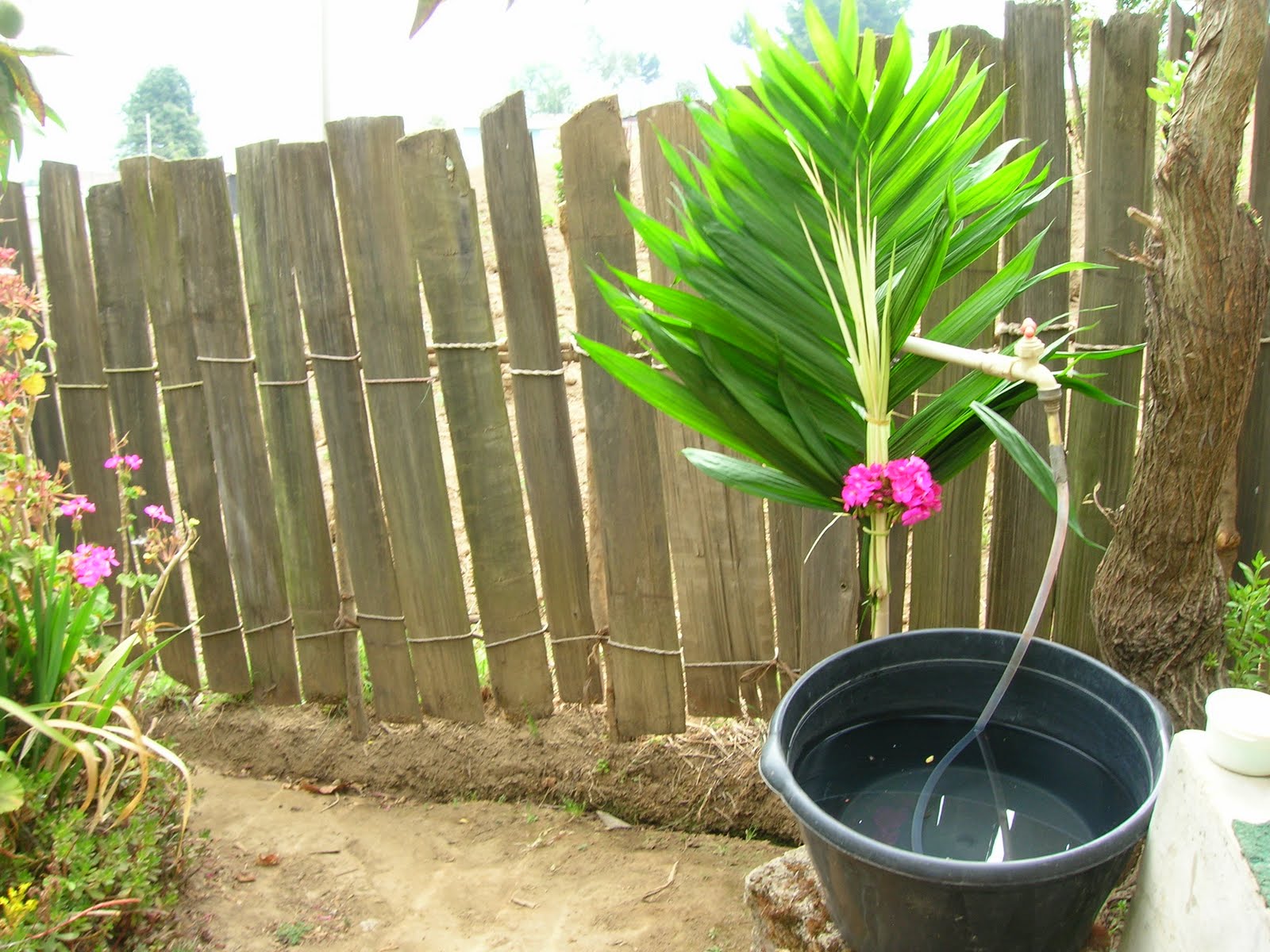
I woke up one morning to find that Don Juan (my landlord/host grandfather) had spiffed up my water faucet.

In the pueblo nearby they had parade / processions on a daily basis (sometimes twice) in which the floats were large religious images (statues with regalia) carried on the shoulders of 20 or more people, walking along at a slow pace along the route. Every so often other people switch in to help carry. There are also alfombras (carpets) laid on the ground which are actually just artfully places sawdust and flower petals. Unfortunately I don't have any pictures of those, as the rain washed them away before I made it into town this weekend.

On Thursday I had the traditional holy week breakfast with my host family -- sweet bread dipped in honey with hot chocolate to drink and fruit cooked in honey sauce. It was tasty, but a bit over the top on sweets for me that early in the day. Apparently the sweets are to commemorate Jesus' last week in Jerusalem. For Easter I went to the house of a U.S. born nun who has been living here in Guatemala for over 30 years. She invited my site mate and me over for a delicious chicken and vegetable roast/stew/something that really hit the spot. It was a quiet holiday for me, punctuated by the bombas (firecrackers that sound like a cannon) that someone kept lighting off in the center of town.

Saturday, April 23, 2011

Crunchings and Munchings

Women in my town have a time-consuming trifecta of tasks that take up the bulk of their day: cooking, cleaning, and weaving. These are in addition to ongoing childcare, which is no small thing in any family, and is particularly impressive where families with upwards of 10 children are not uncommon.  In this post I'll tackle Cooking.  

~~~~~~~~~~~~~~

o
One of the "estufas mejoradas" that many international aid organizations help to get into communities around Guatemala.
Since I've already spent some time on food in other posts, I won't delve into what the women in my town cook, but I thought I'd look a bit at how they cook it. First of all, the majority of cooking happens over wood fired stoves here in my site. My host family has a gas stove they use as well as fire, but most families have just a wood stove. 

In other areas of the country there are families cook over an open fire, which is terribly inefficient as far as wood usage goes, and leads to loads of respiratory illness in families, particularly in infants strapped to their mothers' backs while the daily cooking gets done. Most families in my town have an estufa mejorada (improved stove), which really increased the burning efficiency of the stove, and decreases the amount of smoke and pollution inside the house.  

Grilling outdoors, more for tradition than taste, in this case.  This was a soup for Day of the Dead and so even though it was in a pot and probably didn't absorb much flavor from the flame, it just couldn't be done indoors on a gas range.
Just like in the U.S., there are opinions over what method of cooking tastes best, and sometimes people choose to grill over an open fire anyway. Who doesn't want barbecue now and again? There are plenty of people who could cook on a gas stove and choose not to because they think it changes the flavor of what they're cooking.

This is one of the places that sells firewood in town... this pile gets brought in and then mostly decimated on a weekly basis. Notice the wheelbarrow in front of the stack... it might help give a sense of scale.  
Even with the estufas mejoradas in town, cooking meals over flames three times a day leads to using a lot of firewood.  Deforestation is definitely a problem.  When I went for a hike up the ridge with my host family a while back, it was clear that all the remaining trees had been limbed up far above the height of a Guatemalan.  Any lower branches had long since been cut off for firewood.  The majority of the firewood sold in my town doesn't come from anywhere nearby -- it's cut down up in Quiche, which is two departments away (like states in the US) and brought in.  There really aren't any native forests left to speak of where I am. There are some trees up on the ridge lines and clinging to the very steepest of hillsides where farming is impossible.

So, I'd say that cooking is time intensive for the women, health intensive for the families, and resource intensive for the land. Obviously there are downsides to cooking with natural gas or electricity as well, but it seems that the forests in Guatemala have not been managed with sustainability in mind. My knowledge of land use policies in Guatemala is very limited, so I'm speaking strictly from my own observations. However, it appears that what could be a renewable resource here is being used faster than it can be replenished.  

Sunday, April 17, 2011

Scrubbings and Drubbings

Women in my town have a time-consuming trifecta of tasks that take up the bulk of their day: cooking, cleaning, and weaving. These are in addition to ongoing childcare, which is no small thing in any family, and is particularly impressive where families with upwards of 10 children are not uncommon. In this post I'll tackle Cleaning.

~~~~~~~~~~~~~~

I'm pleased to introduce you to the pila. It is the main water source in any home or family compound, and thus the hub of cleanliness. A pila is usually made of concrete, has one large, deep basin in the middle where water is stored and two shallow basins on the sides. Often times one will be ribbed to form a washboard texture for scrubbing laundry, while the other will remain smooth to be used for dishes. In practice, the sides don't remain segregated for their intended tasks, however.

My site family has their pila out in the middle of the patio.
Dishwashing here is generally done with the cold water straight from the tap. The water out of the middle basin is accessed with a (relatively) clean guacal or palangana, which is a plastic bowl-like container with a lip around the edge for easy gripping without getting fingers in the water. The dish soap I usually see is a green bar that gets scraped at with a scrubbie of some kind, which is then applied to clean up the dishes. At the end the guacal gives the soapy dishes a quick rinse in the chorro water. Used water drains out the side basin. Since the water we use to clean with isn't pure, I make sure the dishes are fully dry before using them again. 

My training family had a tarp shelter over and around the pila, to help keep debris from falling into the water.
Since indoor plumbing is all rare to nonexistant where I am, children are sent outside to the pila to wash their hands before meals. With the latrine being outdoors as well, it's a quick stop off by the pila on the way back in.

Many homes where I've used latrines don't store their toilet paper out in the out house, so I've developed a skill of washing my hands with a roll of t.p. under my arm, then placing the roll safely on its designated table without wetting the paper with my still dripping hands. The things I'm learning here, I tell you. I've actually adopted the same practice with my latrine in anticipation of a leaky outhouse in the rainy season (also there's not a good storage location out there, and I don't want to be worried about stowaway bugs in my t.p., thank you).

I have a mini pila, with just one side for washing.  My guacal is sitting in the washing basin in this shot.  You can see the whole thing is balanced a bit precariously on rocks.  There are cracks in the main basin, so I can't store water in it.  I use a big black plastic bucket to keep water handy.
Clothes washing is a variation on the dishwashing routine. Clothes are usually soaked in a large basin of some kind to get them wet. My site family dissolves a powdered soap in with theirs, but my training family used liquid soap. After letting the clothes sit a little, they are taken out one by one to be scrubbed by hand along the washboard. We have round balls of soap that are then scrubbed into particularly dirty clothing, often cleaning both the exterior and interior of thick clothing (like jeans or the traditional clothing which is quite durable). Then, the guacal comes back out to use clean water to rinse out the item of clothing... along with a bunch of squeezing and wringing.  Finally we turn the clothing inside out and hang it to dry, after doing our best to remove the excess moisture.


My grandparents have assured me that we in Guatemala are crazy for not having any crank wringers like those they used back in their pre-clothes washer and dryer days. Such things matter less at the moment while I'm in the dry season and I can allow clothing to hang out for as long as it takes to dry all the way through.  Once afternoon rainstorms start becoming regular again I may have to try to improvise something along those lines, though. During training I would have to put out and take down my laundry several times over the course of a few days to get the bulkier items like sweaters and jeans completely dry.


For me, doing my laundry has developed into being a pretty enjoyable task. It's satisfying to see things go from dirty to clean, and I've loved that fresh, sunny smell when I take the clothes down off the line since childhood. The process can be pretty cathartic on days I'm frustrated about something. One particular day that backfired, however, when upon reaching my last item of clothing the wooden pole holding up my laundry line broke and dropped the bulk of my fresh clean wet clothing down into the dust, leaving it far dirtier than it had begun. There was nothing to do but to pick it all up and restart the soaking and scrubbing.

In my time here I've seen people wash their shoes at the pila, their hair, bedspreads, even a dog once (the only dog I've seen cleaned in this country). But of course, cleaning does happen inside the house, too. The floors get swept, if they are packed earth. If they are cement or tile and can withstand mopping, a wet towel is wrapped around the end of the broom. Colorful disinfectant (that perhaps has more coloring than cleaning product inside it) is splashed on the floor and the whole area is wiped down.  

Wednesday, March 23, 2011

Half step forward, Full step back.

Greenhouses.  Tomatoes.  Selling!  Profit!


I have been hearing about these things as a project for my site since before I arrived. The women in the womens group that invited me here had tried growing tomatoes and peppers with previous volunteers, but they just didn't thrive. Not terribly surprising, given that we're at over 8,000 feet in elevation. Somewhere around the middle of 2010, someone suggested to them that maybe if they built greenhouses they could get some real growth going. Keep the heat in, help the sun loving nightshade cousins toast their toes a little and hopefully they could produce some tasty crops to eat and sell.

When I arrived in November, we had a meeting to introduce me to the women. I asked for patience as I got to know them all, and also for input on what projects they might like to work on. The only thing any of them volunteered was growing tomatoes in greenhouses.

Through November and December I went to a few houses to help people plant radishes and carrots, and learn my way around. Mostly, though, there wasn't any work to do because of holidays, and the fact that my counterpart was on vacation from her work at school (and wanted to be on vacation from work with the women, too).

In mid January things got rolling at school, so we started having a few meetings with the women about greenhouses. I went to the city to check out prices on materials. We tried to get a sense of who was committed to the project so we could get going on a trial run.


Throughout all the meetings we played a game of telephone through my counterpart, who shuttled the information from K'iche' to Spanish and back again so I could communicate with the women. Well, somewhere in the game (as often happens) part of the message got lost.

Initially we had over 15 women who wanted to sign on to the project. They each thought they could pony up the Q50 (about $6.25) required to purchase a shared roll of the UV resistant plastic that would hold up for at least a few years on their greenhouse. In mid February we had a meeting to select which greenhouse size and design they wanted to use. I walked them through the costs of production I'd found based on the material prices and quantities I'd found for six different size and shaped greenhouses, ranging from Q200 to over Q500.  The women were quiet.

I had thought I had been very clear about the fact that the plastic was just one of many costs in making the greenhouse. However, they hadn't considered that purchasing materials to build a frame, to make supports for the tomatoes, and to buy the tomato seedlings would add up to much more than the Q50 they'd discussed with their husbands to cover the plastic. Although I had emphasized how much more cost effective it is to team up to make one or several larger greenhouse rather than build many, many smaller ones, that alternative doesn't appeal to them. My suggestion of making very small shelter pegged to the side of their houses to try growing just for consumption and not for sale this first year wasn't popular either.


Every woman chose to withdraw from the project. Perhaps in the future when they can save up, they said. It seems more likely to me that we would need to find some source of outside funding for them to be able to build much.

If they are unable to commit more than Q50 to the project, their household budgets are even tighter than I imagined.  My host family spends Q300 a week on groceries.  They are better off than many of the women in the group, but even so, Q50 is not a huge sum of money in Guatemala. Whether from lack of motivation or lack of means, the greenhouses aren't going forward any time soon.

Honestly, I was both disappointed and relieved. Working on such a tangible project is rewarding because you can see your progress as you build the structures.  On the other hand, I was nervous about making our first project together something that was making them stretch financially, when we didn't know each other well. Building 15 or more greenhouses and planting tomatoes in all of them was asking for trouble as far as I was concerned. Tomatoes are disease prone, for one thing. For another, I don't know how much these women are willing or able to commit to caring for their crops. They wanted to sell them for income, but this is a small town. If they each had a successful crop coming ripe at the same time they likely would have flooded the local market and not made as much profit as they dreamed.

So, four months into site we had spent a lot of time winding up, only to decide not to throw our pitch after all. To mix my metaphors, we're going back to square one. Time to shelve this idea and check out others. Maybe we'll come back around to this one down the road. Maybe not.

Tuesday, March 22, 2011

Guatemalan Cuisine: Eggs and Tomatoes

The drama of Guatemalan Cuisine is like an ensemble cast miniseries. The story is mostly about the ongoing chattering and even bickering of the characters, but it's nice to have a little romance on the sidelines to keep things interesting. Eggs and Tomatoes might be considered the B plot romance. They often come as a pair, and add substance and flavor to any episode/meal in which they appear. They can each take on many forms, and can push a meal over from being a bit ho hum and into pretty satisfying territory.

Tomatoes here aren't really eaten fresh (well, almost nothing is, actually).  They usually make their appearance in chirmol, a tomato based salsa that is made and consumed for each meal -- it's not purchased, and it's not stored.  The process begins by roasting a handful of tomatoes, sometimes on the comal where tortillas are cooked, sometimes in the coals of a fire.  They are peeled and then mashed.  Lime and Cilantro are pretty obligatory ingredients, and sometimes a bit of onion or garlic sneaks its way in as well (although Guatemalans don't seem to care for garlic all that much).  It's not a spicy dish, it just adds some moisture and tang to whatever it's served over.  Which, can be most anything.  Eggs, dobladas or empanadas, beans, rice, potatoes, any of the staples.


These tomatoes went into the coals after cooking on an open fire out in the courtyard.

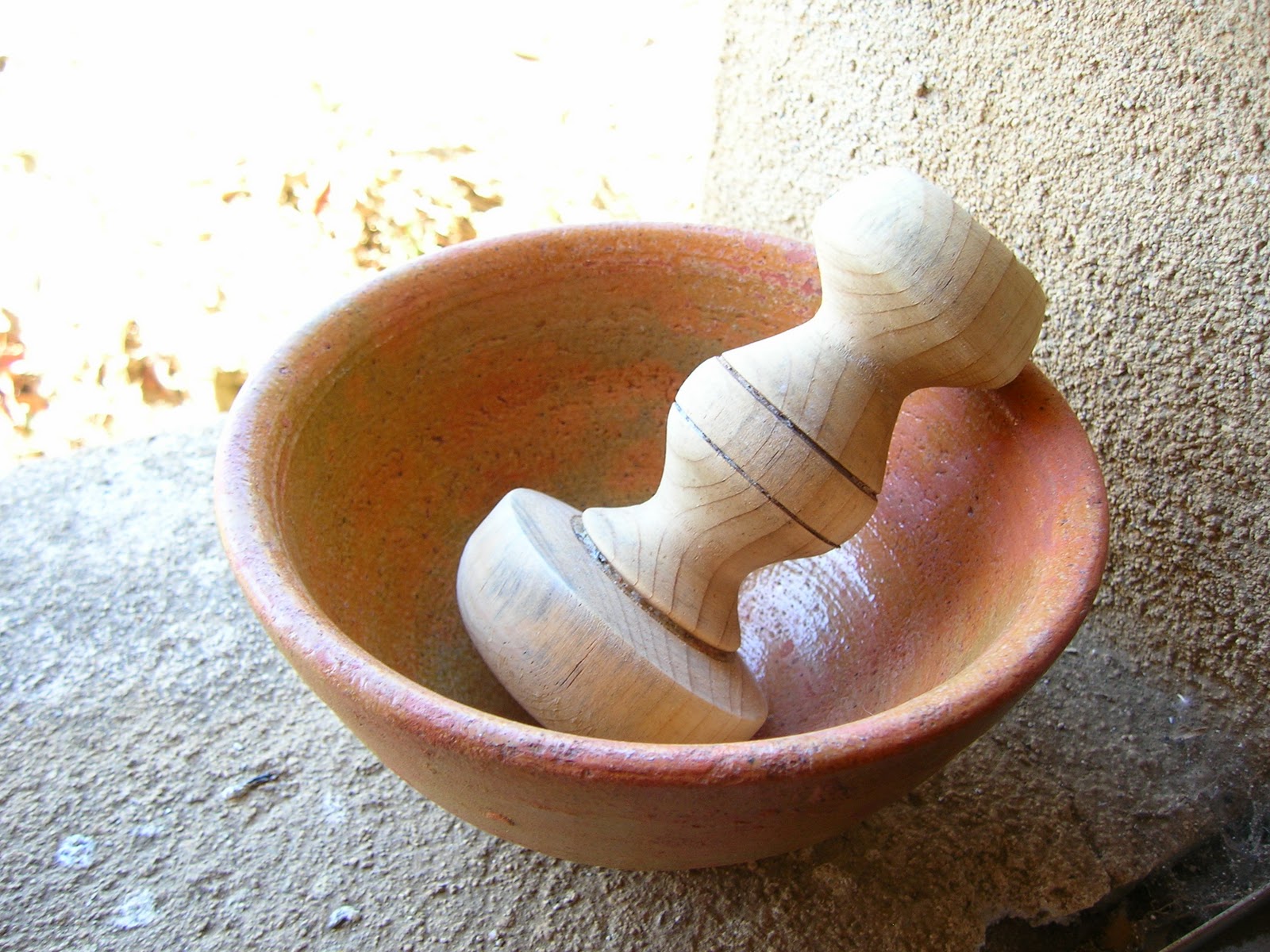
Here's my machucador for mashing tomatoes, and other sauces.

Eggs make an appearance on Guatemalan tables far more frequently than does meat.  In eating with my host families during training and the first few months at site, I probably ate at least one egg a day.  Sometimes it was an egg cooked in soup for dinner.  Sometimes a scrambled egg with tomatoes and onions thrown in for breakfast.  Sometimes a fried egg with chirmol on top, accompanied by black beans and tortillas.

My favorite egg dish quickly became verduras envueltas (wrapped veggies).  My training host mother would whip this out for a lunch or dinner probably once a week, and I always had to hold back from taking a third helping.  It's more or less like a vegetable tempura, and she did it with green beans, cauliflower, and broccoli.  She separated the egg yolk from the whites, and used her electric beater to whip the whites until they were stiff.  Then she added the yolk back in and kept whipping it, so it was still fluffy but had the whole egg there.  Each hunk of cauliflower (or handful of greenbeans) was dipped in the eggy froth and fried in the slightly greased pan.  Once cooked, it was served with (you guessed it), chirmol on top, and on lucky days, a bit of queso fresco crumbled and sprinkled on top.

My site host family has "huevo de comal" in which they beat an egg, add cornflour, and then cook it on the comal as they would a tortilla.  It comes out somewhere between a pancake and a tortilla, and they serve it with chirmol as well.  And, of course, tortillas.


I get my eggs from the cooperative shop nearby;
sometimes brown, sometimes white, always loose in a bag.  

Now that I'm cooking for myself, I still use an egg or two a day.  I'd be concerned about cholesterol, but since I don't really eat dairy or meat in my site, I figure I'm probably not in too bad of shape.  I do a lot of eggs, beans, and tortillas meals, just like I had with my host families.  I haven't mastered how to make chirmol well, but I'm getting there.  I also have been breaking out some recipes from home as well.  I make corn crepes/tortillas about once a week, french toast when I decide to splurge on some bread, and I'm thinking about some egg salad sandwiches soon, too.

Tuesday, March 8, 2011

Carnival

Turns out today is Mardi Gras, which is called Carnival here.  Totally snuck up on me.  The town as a whole doesn't do much, but the kids got a party at school.  Forgetting the day, I breakfasted, showered, did some quick laundry, and headed to the health post to see if any of the women in my group were around to buy veggie seeds.  Ela and Elkin came by to collect me, so I could see the party at school.

We went in to the large school courtyard and there appeared to be a strange fusion of Halloween, Holi (the color festival in India), and Easter going on.

Kids were dressed up in costumes everywhere, the girls tended toward sparkles and fairy wings (both purchased and home made), while the boys tended toward footy pajamas with a Spiderman mask.  Never mind that the footy pajamas were generally covered in dolphins or cows jumping over moons.  There was a smattering of animals... dogs, tigers, and such.  Elkin proudly sported a new Sportacus costume from Lazy Town, one of his favorite TV shows.  There were a few clowns running around (again, onesies of varying colors, topped with a classic rainbow wig), and Elkin did NOT like them.  Hendrick started out running around in a full on Batman costume, but tired of that and stripped down to the Ben 10 outfit he was wearing underneath.  Pretty sure that was his pajamas, actually.

There was colored powder and confetti everywhere.  General chaos reigned, as kids, parents, and teachers alike ran about ambushing one another with their colorful ammunition.  At first I only saw them with baggies of confetti and grabbing piles up from the floor.  Soon, I noticed the were also using cascarones (colored eggs shells filled with confetti and then closed with tissue paper).  One girl near me sort of shyly sprinkled some confetti on my head, smiling, but was too timid to throw it with much gusto.  It didn't seem to be a terribly religious celebration, but they certainly went into it with enthusiasm!  Not too different from Fat Tuesdays elsewhere, I suppose.

One teacher had a microphone and was talking over the madness trying to get just the first and second year students out in the middle of the courtyard.  Eventually most of them turned up to give their "presentation" of a dance.  Clearly nothing in particular had been planned because when they turned on the music, the kids all sort of hopped around in a mob.  Each successive grade came out as well, taking their turns.  Those not dancing were too busy attacking one another and eating snacks to pay attention.  

I was thoroughly enjoying the spectacle, and wondering whether I could get any ammunition of my own when I saw a flurry of movement to my left and I was hit squarely with an egg.  To my dismay, this was not one of the confetti filled eggs, but a fully raw egg, leaving me with white and yolk dripping down my face, hair, and shoulder, into my pockets and onto my feet. Although I hadn't been the intended target, I definitely got the full brunt of the projectile.  The girl next to me (who I think was meant to be the recipient) was horrified, and the assailant was nowhere to be seen.

So, my festivities were cut short.  I don't do that well with sticky, so I excused myself to wash my face, hair, and clothing for the second time that day.  I had to chuckle as I walked home, with egg seeping through my sweater and onto my t-shirt beneath.  Whoever threw that egg is going to have a good story to tell his buddies!

I didn't have my camera along, so I took some shots of of the patojos (kids) when they got home after I had cleaned up.  Even though Fernando and Elkin are not old enough for school, they were quick to embrace the festivities.  And, why take the costume off once at home?  Play time!!


Elkin is announcing something very important.  No idea what he said.


Hendrick didn't want to be in the picture, but he couldn't stand that they were posing "wrong" so came to fix them up.

Much better.  Apparently.

Monday, March 7, 2011

School Daze: Junta Directiva

A Junta Directiva is like a board of directors. Among the first things I saw in my first week of observation in school was the process of electing the Junta for each grade in the Básico school (which was also each classroom, essentially a student council).

Political geek that I am, their method of voting was curious to me. The kids shouted out names of classmates in a verbal nomination process. No one needed to second the motion; say a name and it gets on the board. Then each person nominated was written on the board and numbered. As soon as there were as many nominees as positions on the Junta, nominations stopped.

One student went around the room asking each classmate to vote verbally, and then would call out the number across the room for another person to tally on the board. They were told not to call out names, just numbers. But since the whole room is watching and listening, it’s not like that creates any secrecy. It’s a time consuming process as well. The person with the most votes becomes President, the next gets VP, then Secretary, Vice Secretary, Treasurer, Vice Treasurer, and after that Delegates. There was no sense of tailoring the person nominated to the role... they just went straight down the line of titles. During a parents meeting later, the parent Junta Directiva (I think something like the PTA) was chosen the same way.  

Why it's done this way, I don't know. They could easily have done a show of hands for each nominee and counted. They could have asked people to write their preferences on a slip of paper. They could have dropped beans into a jar for their preferred candidate. As it is, it means that those voting toward the end of the process can see who is ahead. It means everyone knows who is voting for who. Perhaps it's something about valuing each person's input that they vote one at a time? Perhaps it's important to vote publicly? But if that's true, why use the numbers? Clearly (and per usual), I have more questions than answers.  

Sunday, March 6, 2011

School Daze: Getting Started

In the middle of January, school started. Ela works with Junior High aged kids in the next town over. I’ve more or less agreed to do team teaching with her. I was particularly interested in helping out with the Home Ec class as a means to teach nutrition, which fits right into my program of Food Security. On the first day of school I also said I would give one afternoon a week to meet with whoever was chosen to teach English, since the person who had taught English last year took a different job and was not going to be replaced. None of the other teachers speak English. So, I planned to work with three age groups on Mondays and Wednesdays.

Week I:

On the first day of school, a Monday, we had an all school assembly. Everyone crammed into a classroom to review the rules and introduce the teachers (including yours truly). The kids were told not to come on Tuesday, so the teachers could get things straightened out. By that I mean deciding on a course schedule and which teachers would teach each subject. Apparently teacher planning days before the school year begins is not a norm here.

The next day some Mayan Justice was handed down on an apprehended thief (in this case, just some public shaming). So, the teachers went to watch the spectacle.

On Wednesday there was still no schedule, so they went by last year's schedule. Theoretically. They were doing it by memory, and not everyone's memory lined up. Ela and I used the day to do introductions with the kids. She already knew most of them, but they each stood up and said their name for my benefit. Generally they were quiet and didn't enunciate much, sometimes talking from behind their hand. Side conversations were rampant with the other kids, leaving me unable to distinguish 80% of the names, so Ela repeated each name loudly and clearly afterward. In the end it felt a little futile, since my mind is not a steal trap for names after hearing them once and it took a lot of time. On the other hand, we had nothing planned for the class period, so…

After all the names, Ela gave a little monologue of her advice for the kids as the year starts. She lamented the attrition rate. Of 36 kids from 2nd Básico last year, 20 advanced to 3rd. Of the 76 from 1st last year, about 45 made it into 2nd. Some of this is drop outs, some is people being held back to repeat a year. There were also some new faces, so I imagine others chose to go to a different school, since there were some transfer kids coming in. 

Next she warned them against romance, since apparently the congress is considering outawing noviazgo (dating) in the schools, with expulsion as the consequences. How all this is defined or enforced seems unclear. Regardless of whether that ever makes it onto the books, she blames early marriage for a lot of the attrition, and laid on a heavy guilt trip about how many hours their parents work in the sun to afford to send their kids to school.

Finally, she forbid the kids from speaking K’iche’ in class. Anyone caught speaking K’iche’ will have to write lines (in Spanish) as punishment. On the one hand, I get that they’ll never get good at Spanish if they’re not forced to use it consistently (that’s how any foreign language goes). On the other hand, part of me cringed as she told them that K’iche’ is fine at home but it will never get them anywhere in life and will only lead to discrimination against them. How true that is, I don’t claim to know, but it made me think of the many languages already lost around the world and mourn a little.  

Week II:

Ela had volunteered to teach English, and rearranged the schedule so most of the English classes would be on Mondays and Wednesdays when I would be there anyway. That would be fine, except it means I miss out on the bulk of Home Ec classes, which had been switched to Tuesdays (when I take K’iche’ and cannot get to the school). 

Ela and I only work Monday-Wednesday, so when we arrived on the next Monday, we still didn't know who we would be teaching at what times.  Apparently there was no way to communicate that to us between Thursday and Monday.  (Cell phones?  Anyone?)  As we looked at the schedule, it became clear we were scheduled in multiple places simultaneously.  We pointed the issue out, and it was resolved the following week.

Monday, we made things up on the spot in the classrooms, because we hadn't known who, what, or when we would be teaching. Not all the kids had desks, so we lost some class periods looking around for seating in storage, cleaning it off, and getting it into the classroom. We also spent some time electing the Junta Directiva (student council) for each grade.

Week III and Beyond:

By the third week, things were settling into a rhythm, of a sort. At least we started in on content.

The school didn’t know when exams would be or when each quarter would begin and end (apparently that's decided at a national level). Even if Ela been interested in sitting down with me for long range planning, it would have been a challenge. 

We did a diagnostic quiz on the English level of the kids, and the 3rd year and 2nd year students didn't know anything from the previous years' curriculum, so we started everyone on the first year stuff. Home Ec consisted of dictation.  

My inner camp counselor was screaming to get these kids out of their desks and doing activities. Happily, Ela is excited to work actual cooking into Home Ec, and we made Jam last week. One small step, but a good one. Despite my best intentions not to be sucked into actually being the English teacher and making sure to just provide support, I'm essentially taking over that class on the days I'm there. We'll see how well I can ease back out of that, and if it's worth the effort. I learned yesterday that exams for the quarter are probably only two weeks away, so we'd best figure out what we can test the kids on.

I love having scheduled things to do each week. I love working with kids again. My direct communication skills are being challenged and honed as I negotiate just what my role will be.  I am learning tons about how the education system works here, and while I see many hurdles, I am glad this is becoming part of my daily work.  

Saturday, March 5, 2011

School Daze: Some Context

I have been observing and beginning to help teach classes in the public Básico school in the next town over (7th-9th grade age kids). Before getting to my role, here are some things that stuck out at me about how the day to day in this school works. 

These kids have 9 class periods a day, half and hour each. They take 15 subjects. They are taking all their courses in Spanish, although most speak K'iche' in their home. With class sizes of over 50 kids, a good portion of each class period is taken by calling attendance.  


Classes are regularly cancelled. Sometimes for official reasons -- Valentine's Day, or an assembly for the parents. Other times because the teacher just doesn't show. Maybe he wanted to run an errand. Maybe she didn't like being scheduled for classes late in the day. It happens with alarming frequency. The students have no text books. There is no budget for worksheets, so any photocopies come out of a teachers pocket (I haven't seen anyone ponying up for that).  

Many classes consist of a teacher dictating out of their single textbook, while the kids write what they hear verbatim in three colors of pen, coded for Title, Subtitle and Body of the text. The kid’s heads move in synchronized waves as they look up at the teacher and down at their papers. Self directed activities are all but unheard of, and I have yet to see a student speak up to ask for clarification (even when it's clear the bulk of the kids are confused). It appears that when homework is given, it is graded on a pass/fail basis. If you have something to show (even if it's completely wrong), you get the points. If you don't, you get a zero. Homework is graded during class, calling the students up during attendance, making it common to teach no new material on days that homework is due.

On the other hand, the teachers haven't yet been paid and have been working for approaching two months.  It's harder to fault them for laxness when they're working for free thus far.  I will not be surprised if there demonstrations or strikes on the horizon.

Friday, March 4, 2011

Adobe


Recipe:
Wet soil. 
Add straw.
Mix well.
Pack into form.
Repeat ad nauseum.

Let sit 5-10 days, varies with weather.