Showing posts with label work. Show all posts

Friday, February 3, 2012

Soap [Success]

Months ago, a group of women in another aldea (village) asked that my site mate and I teach them to make soap. We agreed, and went through a series of hygiene charlas (talks, trainings, activities...) with them as we did the research to teach ourselves how to make it and how to manage the logistics of doing it with them in their community.

At first we gathered the supplies and tried doing it on our own to iron out any kinks in the process. Good thing, too, because we were going based on phoned in advice from another volunteer, and something crucial was lost in the process and our soap did not turn out. At all.

So we jumped through some hoops to import our very own soap making expert volunteer to show us how it was done. It turned out that we'd done everything right, but just needed to stir a little faster, and voila! Success!


Day 1:  Boil 5 gallons water.  Mix it with 5 gallons used oil (we bought from a fried chicken place).  Add 7 bottles of lye.  Mix rapidly stirring only clockwise for one to three hours, until the mixture is thick enough that it doesn't drip off your stirring stick when it is pulled out.  Cover the mixture, let it set for 24 hours in a cool dry location.


Our cautionary warnings of wearing protective materials (left) 
and the steps to make soap on the first day (right).


Our host, Maria, all suited up to take her turn at stirring.


I stirred with another woman, so she could get the idea of the speed and rhythm needed.


My site mate whipping up the mixture toward the end of the process.


Our soap, left to set up over night.


Day 2:  Uncover the soap and pour off any excess oil that remains in the mixture. If the soap set hard, cut it into bars/chunks and wrap them in newspaper.  If the soap remains like a cookie dough texture, ball it up and wrap it in newspaper.  Leave wrapped in a cool, dry location for 4-6 weeks to cure.


It felt wonderful to finally be able to deliver on our promise. To successfully make it through the two day soap making process while teaching in Q'eqchi'. And, to share a bit of our site with a friend from training.

Thursday, October 6, 2011

Stoves [The Once and Future Project]

In my time in Alta Verapaz I have spent a fair amount of time working on developing an improved efficiency wood burning stove project. The cooperative where I work held a general assembly in September and voted down participating, so I won't see these put in during my time here. It’s a disappointment in some ways, but it was the decision of the community and that’s how things need to happen in participatory development.


I thought I'd still share what I've learned about the technology, since it is work that is being done by many other volunteers across Guatemala. Although its not a project I'll get done, it is certainly a relevant need for my community in A.V.


To set the scene, here are a few pictures of the current state of affairs in kitchens in my community. Almost all houses use an open fire on a fire table, relying on the smoke making its way out between the space where the roof and walls do not meet. This leads to smoke in the living space, which leads to increased respiratory problems affecting women and children the most. What's more, it's a very inefficient use of fire wood, putting a squeeze on family budgets (either through money spent to purchase the wood or time spent to collect it) and exacerbating deforestation problems.   


Now here is a set of photos of an improved wood burning stove under construction.  Most of these are from the trip that Wendy and I took to the department of San Marcos back in June to learn the construction process.  This particular style of stove is unique to that community, and was designed in collaboration with the participants/users to fit the cultural needs as an acceptable substitute for their previous set-up.


The builders take a hoe to the hard packed dirt floor to get the base level
and measured out to the right dimensions.
The base is three sides of a box built out of cinder block.
To prepare a concrete slab under the burning chamber, they built a frame
without nails so the wooden pieces could be easily removed and reused afterward.  
The finished form ready to pour the concrete.


The slab has rebar in the middle to provide structure. 
At this point the stove is left overnight to allow the concrete to set.

The next day, a third layer of block is placed upon the slab.
The blocks are filled with pumice to increase the thermal retention.
Bricks create an inner chamber, leaving another buffer of pumice between the blocks and bricks.
A pumice filling made the floor bricks ramp upwards toward the back of the stove.
This helps with air flow, and to prevent users from over-loading the stove with firewood.
The cracks were filled...
...and the stove top checked for a perfect fit.  
The chimney is a cement tube for the first meter, then continues up as metal.
The "hat" on the top of the chimney is a signature of every "improved stove."
The exterior is coated and smoothed, although the stove top is left loose for easy removal during cleaning.
A family posing by their completed stove.
The final product has the four signature features of an improved stove: A metal stove top, a door where the fuel is inserted, a chimney, and a "hat" on the chimney top. In addition, this stove is has a larger work space along the top, since the stove is the main item in Guatemalan kitchens. This provides counter space for use in food preparation or for eating. The side left open below the fire chamber acts as an ideal space to store fire wood, particularly in rainy locations such as Alta Verapaz where it is a challenge to keep firewood dry.   

Although these stoves won't be appearing in my community any time soon, I do still have hope that they will eventually be the standard kitchen ware here. I know that the process of developing the project captured the imaginations of many cooperative members, and that some of them may be just the leaders this community needs to get the project to fruition at some point in the future.  

Monday, August 1, 2011

Week in San Marcos

After IST, Wendy and I headed back to site for just over a week, only to turn around and leave again.  During IST we had connected with a Food Security PCV one year ahead of us who has done a lot of work on estufas mejoradas (improved stoves), which is one of the projects that we are working to implement up in A.V. (replacing cooking over an open fire).  So, we arranged to spend a few more of our training days out in his site in San Marcos.  It took us two days to get there, we spent two days constructing two stoves, one day delivering construction materials, and then headed back to the PC Office again for the All Volunteer Conference and 4th of July festivities. 

One of the stoves we built, approaching the finish.

Dolled up for the 4th

Sunday, July 31, 2011

Black Bean Burgers!

In the third week of June, I joined Wendy for my first cooking class in Alta Verapaz. Wendy hadn’t actually tried the recipe before, so she stayed late at the co-op with me one night and we tried them out to work out any glitches in advance. The Guatemalans who were passing by on their way home all thought we were insane for having a meal without tortillas (honestly, we didn’t have buns, either – the bean patties were pretty much the whole menu). Wendy’s counterpart, Irma, was so concerned about our tortilla-less situation that she went and found someone making tortillas to give some to us. Even when we try to cook for ourselves we have people looking out for us.

I really liked the burgers, and they were a hit with both groups of women we taught the recipe.  So, I thought I’d share them with you.
The women mashed the beans on the same piedra de moler where they prep their corn dough for tortillas.  You can do it however you want, just get them kinda paste-y (not liquid).

The women don't seem to have cutting-boards, or consider them necessary.  They are pros with wielding knives mid air.

No spoons for mixing for them, either... just kneading with their hands.

Pans over an open fire... forks instead of spatulas.


Filomena showing off some of the burgers once cooked.

Ingredients:
Black Beans (one can)
Oatmeal (3/4 cup)
Egg (one or two)
Garlic (3 small cloves)
Onion (one small onion, diced)
Carrot (1/2 cup shredded)
Bell Pepper (diced)
Salt (to taste)
Pepper (to taste)
Oil (for sautéing)

Take half of beans and mash them into a paste, then add the other half.  Add the veggies and spices.  Scramble the egg and add.  Add oatmeal to reach desired consistency.  Form burger patties by hand… this takes some practice and the mixture sometimes needs some encouragement to stay together. 

Fry the patties in a small amount of oil in frying pan (just enough to keep it from sticking… this was a hard point to get across to the women).  Trying to flip the patties too soon may make them crumble apart.  They’ll still taste good, but will be harder to serve. 

All the proportions are guidelines only.  Trial and error is the best way to work out what combo makes things stick together best for you.  We haven’t tried radishes in there yet, but we bet they would be good in place of (or as well as) the carrots.  Also, for those of you who have access to them, I’m sure leeks would be delicious!

Friday, July 29, 2011

First Forays

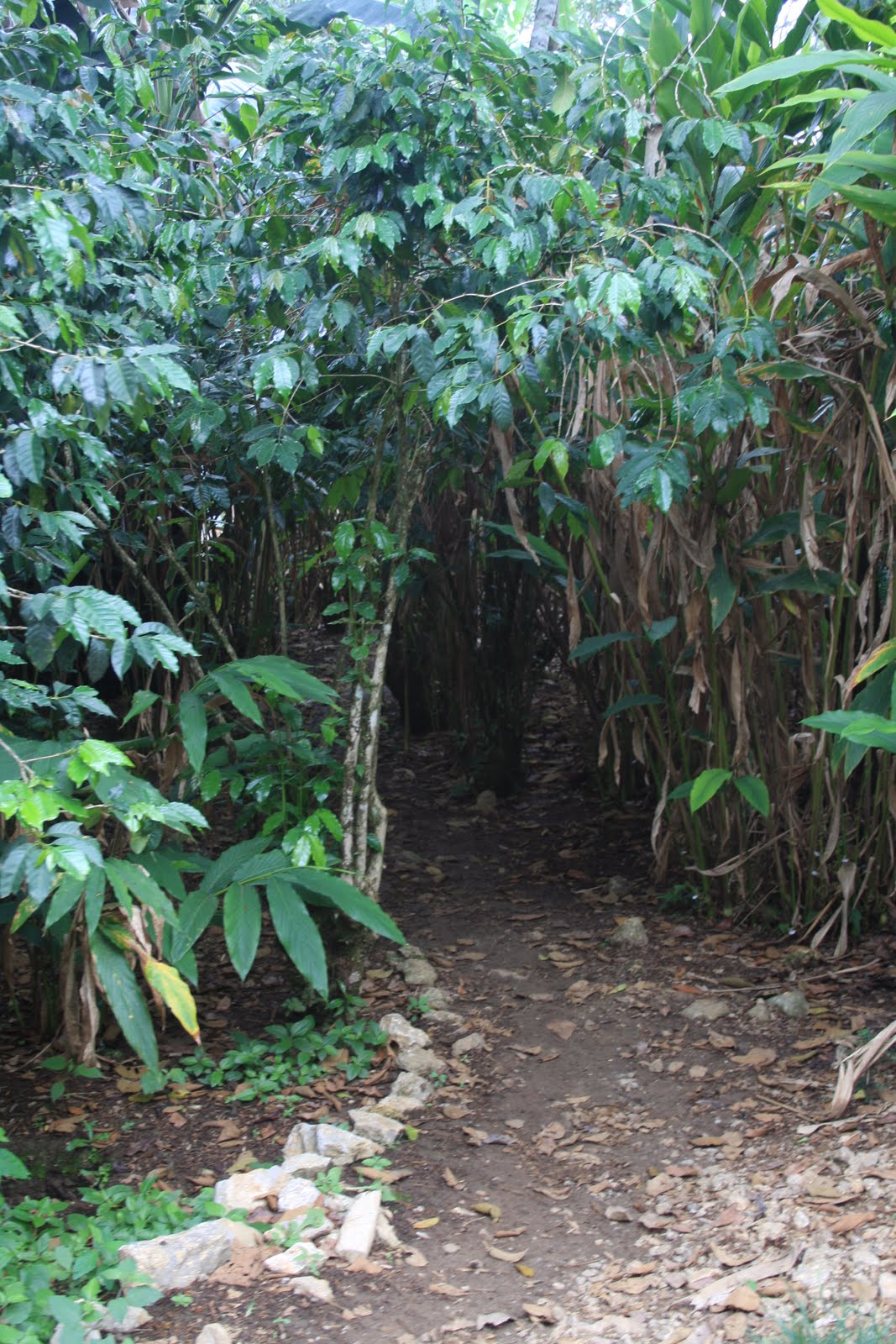
One day early in June I went out to about a dozen different households with a few committee members in my cooperative (this was groundwork for two big projects my sitemate Wendy has going that I hope to help on… more details in a later post).  It was a nice little taste of getting outside the “town” of Chiyó (take that with a heaping spoonful of salt) and into the other communities.  Here are a few pics, courtesy of Wendy’s friend Thomas who was visiting from the states.
A shot of some representative sloping fields with corn growing in the foreground, with cardamom growing in the midfield. 

Sometimes you have to watch your head.
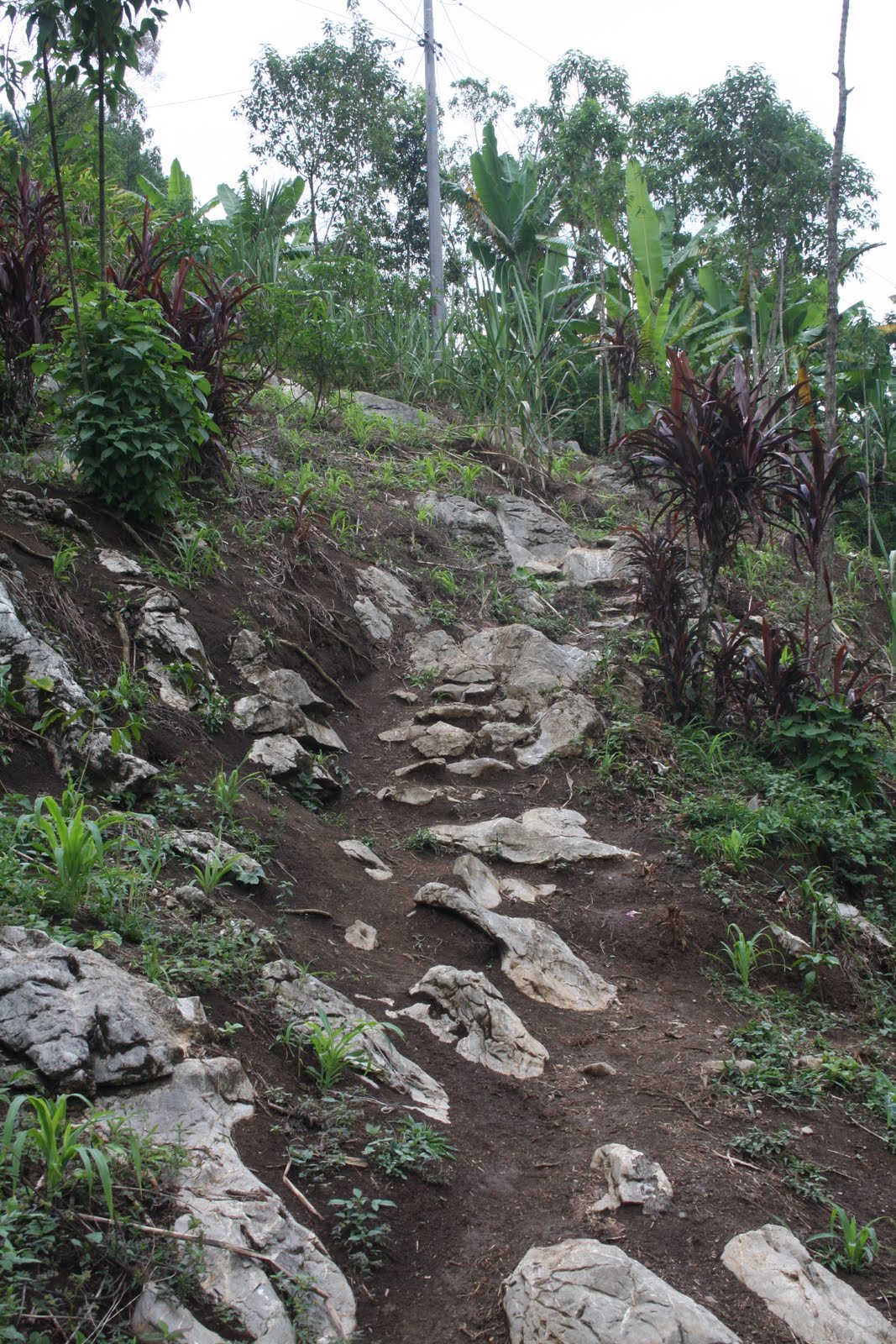
Sometimes you have to watch your feet.
Houses tend to be pretty isolated from one another, surrounded by crops.  

Wednesday, May 18, 2011

The Wisdom to Know the Difference

Those who know me well know I struggle with decisions. I do not take them lightly. I am sometimes *ahem* overly distraught by choosing my entree at a restaurant. I changed my major multiple times during college. I sometimes devote more time to making a decision than it takes to actually carry out said decision. I have been accused of paralysis by analysis.

Last Thursday I made the decision to leave my site in Sololá and move to a new site. I went through a long discernment process filled with many conversations with family, friends near and far, and Peace Corps support staff. Now, I have determined that my best chance to find what I consider to be success as a volunteer lies elsewhere.

I could write a laundry list of justifications, of things that went wrong and ways I tried to remedy the situation. I could talk about problems with my host organization (which has dissolved), with my counterpart, with my host family, with integration into the community as a whole. But, with exceptions where a safety issue arises suddenly, I think these cases tend to come out of a long accumulation of struggles and trials. Any one of these problems might be surmountable, but the aggregation of them has worn me down to the point that I must choose a new path. I have not exhausted all the opportunities in this site, but I have exhausted my own ability to pursue them.

The past several months have seen me move between emotional states of determination, enthusiasm, stubbornness, disappointment, desperation, hopefulness, stress, apathy, frustration, relief, confusion, exhaustion, and many more. There have been small victories and occasional connections with those in the community. The overall trend was moving slowly toward cynicism and resignation. At some point I realized that as much as it was tempting to stick it out here to prove I could, that was a path that didn't serve me, the community, or the Peace Corps well.

I joined the Peace Corps to learn and to teach, to share and receive, to join a community and to serve where I am able.  Before I can do any of these things well, I have to care for myself. There is a reason the flight attendants tell us to first secure our own oxygen mask before helping those around us. Next week I will move to a new site in the department of Alta Verapaz. This is my way of reaching for the oxygen mask.


God, grant me the serenity
to accept the things I cannot change;
courage to change the things I can;
and wisdom to know the difference.


Wednesday, March 30, 2011

Note to Self

“Nevertheless, all of us working in development must remember that our job is not to become heroes, but to make heroes out of the people with whom we are working.  Some gratitude will always be forthcoming, but when things are as they should be, the people will mainly be thanking each other.”
--Two Ears of Corn: A Guide to People-Centered Agricultural Improvement by Roland Bunch


I like this quote. I strive to remember it in my work. I try to get out of the way, and help the people I work with direct their own development. However, you can't empower someone who isn't interested in what you have to offer.    


It's all in the balance. Try to instill enthusiasm, but be careful to choose your audience well.  


In the five months I've been here, I've seen little interest or motivation from the women who invited me here to begin with. Maybe that will change, and if it does I'll be thrilled to spend more time with them.  In the meantime...   


I think it's time I find a new audience.  


Wednesday, March 23, 2011

Half step forward, Full step back.

Greenhouses.  Tomatoes.  Selling!  Profit!


I have been hearing about these things as a project for my site since before I arrived. The women in the womens group that invited me here had tried growing tomatoes and peppers with previous volunteers, but they just didn't thrive. Not terribly surprising, given that we're at over 8,000 feet in elevation. Somewhere around the middle of 2010, someone suggested to them that maybe if they built greenhouses they could get some real growth going. Keep the heat in, help the sun loving nightshade cousins toast their toes a little and hopefully they could produce some tasty crops to eat and sell.

When I arrived in November, we had a meeting to introduce me to the women. I asked for patience as I got to know them all, and also for input on what projects they might like to work on. The only thing any of them volunteered was growing tomatoes in greenhouses.

Through November and December I went to a few houses to help people plant radishes and carrots, and learn my way around. Mostly, though, there wasn't any work to do because of holidays, and the fact that my counterpart was on vacation from her work at school (and wanted to be on vacation from work with the women, too).

In mid January things got rolling at school, so we started having a few meetings with the women about greenhouses. I went to the city to check out prices on materials. We tried to get a sense of who was committed to the project so we could get going on a trial run.


Throughout all the meetings we played a game of telephone through my counterpart, who shuttled the information from K'iche' to Spanish and back again so I could communicate with the women. Well, somewhere in the game (as often happens) part of the message got lost.

Initially we had over 15 women who wanted to sign on to the project. They each thought they could pony up the Q50 (about $6.25) required to purchase a shared roll of the UV resistant plastic that would hold up for at least a few years on their greenhouse. In mid February we had a meeting to select which greenhouse size and design they wanted to use. I walked them through the costs of production I'd found based on the material prices and quantities I'd found for six different size and shaped greenhouses, ranging from Q200 to over Q500.  The women were quiet.

I had thought I had been very clear about the fact that the plastic was just one of many costs in making the greenhouse. However, they hadn't considered that purchasing materials to build a frame, to make supports for the tomatoes, and to buy the tomato seedlings would add up to much more than the Q50 they'd discussed with their husbands to cover the plastic. Although I had emphasized how much more cost effective it is to team up to make one or several larger greenhouse rather than build many, many smaller ones, that alternative doesn't appeal to them. My suggestion of making very small shelter pegged to the side of their houses to try growing just for consumption and not for sale this first year wasn't popular either.


Every woman chose to withdraw from the project. Perhaps in the future when they can save up, they said. It seems more likely to me that we would need to find some source of outside funding for them to be able to build much.

If they are unable to commit more than Q50 to the project, their household budgets are even tighter than I imagined.  My host family spends Q300 a week on groceries.  They are better off than many of the women in the group, but even so, Q50 is not a huge sum of money in Guatemala. Whether from lack of motivation or lack of means, the greenhouses aren't going forward any time soon.

Honestly, I was both disappointed and relieved. Working on such a tangible project is rewarding because you can see your progress as you build the structures.  On the other hand, I was nervous about making our first project together something that was making them stretch financially, when we didn't know each other well. Building 15 or more greenhouses and planting tomatoes in all of them was asking for trouble as far as I was concerned. Tomatoes are disease prone, for one thing. For another, I don't know how much these women are willing or able to commit to caring for their crops. They wanted to sell them for income, but this is a small town. If they each had a successful crop coming ripe at the same time they likely would have flooded the local market and not made as much profit as they dreamed.

So, four months into site we had spent a lot of time winding up, only to decide not to throw our pitch after all. To mix my metaphors, we're going back to square one. Time to shelve this idea and check out others. Maybe we'll come back around to this one down the road. Maybe not.

Monday, March 7, 2011

School Daze: Junta Directiva

A Junta Directiva is like a board of directors. Among the first things I saw in my first week of observation in school was the process of electing the Junta for each grade in the Básico school (which was also each classroom, essentially a student council).

Political geek that I am, their method of voting was curious to me. The kids shouted out names of classmates in a verbal nomination process. No one needed to second the motion; say a name and it gets on the board. Then each person nominated was written on the board and numbered. As soon as there were as many nominees as positions on the Junta, nominations stopped.

One student went around the room asking each classmate to vote verbally, and then would call out the number across the room for another person to tally on the board. They were told not to call out names, just numbers. But since the whole room is watching and listening, it’s not like that creates any secrecy. It’s a time consuming process as well. The person with the most votes becomes President, the next gets VP, then Secretary, Vice Secretary, Treasurer, Vice Treasurer, and after that Delegates. There was no sense of tailoring the person nominated to the role... they just went straight down the line of titles. During a parents meeting later, the parent Junta Directiva (I think something like the PTA) was chosen the same way.  

Why it's done this way, I don't know. They could easily have done a show of hands for each nominee and counted. They could have asked people to write their preferences on a slip of paper. They could have dropped beans into a jar for their preferred candidate. As it is, it means that those voting toward the end of the process can see who is ahead. It means everyone knows who is voting for who. Perhaps it's something about valuing each person's input that they vote one at a time? Perhaps it's important to vote publicly? But if that's true, why use the numbers? Clearly (and per usual), I have more questions than answers.  

Sunday, March 6, 2011

School Daze: Getting Started

In the middle of January, school started. Ela works with Junior High aged kids in the next town over. I’ve more or less agreed to do team teaching with her. I was particularly interested in helping out with the Home Ec class as a means to teach nutrition, which fits right into my program of Food Security. On the first day of school I also said I would give one afternoon a week to meet with whoever was chosen to teach English, since the person who had taught English last year took a different job and was not going to be replaced. None of the other teachers speak English. So, I planned to work with three age groups on Mondays and Wednesdays.

Week I:

On the first day of school, a Monday, we had an all school assembly. Everyone crammed into a classroom to review the rules and introduce the teachers (including yours truly). The kids were told not to come on Tuesday, so the teachers could get things straightened out. By that I mean deciding on a course schedule and which teachers would teach each subject. Apparently teacher planning days before the school year begins is not a norm here.

The next day some Mayan Justice was handed down on an apprehended thief (in this case, just some public shaming). So, the teachers went to watch the spectacle.

On Wednesday there was still no schedule, so they went by last year's schedule. Theoretically. They were doing it by memory, and not everyone's memory lined up. Ela and I used the day to do introductions with the kids. She already knew most of them, but they each stood up and said their name for my benefit. Generally they were quiet and didn't enunciate much, sometimes talking from behind their hand. Side conversations were rampant with the other kids, leaving me unable to distinguish 80% of the names, so Ela repeated each name loudly and clearly afterward. In the end it felt a little futile, since my mind is not a steal trap for names after hearing them once and it took a lot of time. On the other hand, we had nothing planned for the class period, so…

After all the names, Ela gave a little monologue of her advice for the kids as the year starts. She lamented the attrition rate. Of 36 kids from 2nd Básico last year, 20 advanced to 3rd. Of the 76 from 1st last year, about 45 made it into 2nd. Some of this is drop outs, some is people being held back to repeat a year. There were also some new faces, so I imagine others chose to go to a different school, since there were some transfer kids coming in. 

Next she warned them against romance, since apparently the congress is considering outawing noviazgo (dating) in the schools, with expulsion as the consequences. How all this is defined or enforced seems unclear. Regardless of whether that ever makes it onto the books, she blames early marriage for a lot of the attrition, and laid on a heavy guilt trip about how many hours their parents work in the sun to afford to send their kids to school.

Finally, she forbid the kids from speaking K’iche’ in class. Anyone caught speaking K’iche’ will have to write lines (in Spanish) as punishment. On the one hand, I get that they’ll never get good at Spanish if they’re not forced to use it consistently (that’s how any foreign language goes). On the other hand, part of me cringed as she told them that K’iche’ is fine at home but it will never get them anywhere in life and will only lead to discrimination against them. How true that is, I don’t claim to know, but it made me think of the many languages already lost around the world and mourn a little.  

Week II:

Ela had volunteered to teach English, and rearranged the schedule so most of the English classes would be on Mondays and Wednesdays when I would be there anyway. That would be fine, except it means I miss out on the bulk of Home Ec classes, which had been switched to Tuesdays (when I take K’iche’ and cannot get to the school). 

Ela and I only work Monday-Wednesday, so when we arrived on the next Monday, we still didn't know who we would be teaching at what times.  Apparently there was no way to communicate that to us between Thursday and Monday.  (Cell phones?  Anyone?)  As we looked at the schedule, it became clear we were scheduled in multiple places simultaneously.  We pointed the issue out, and it was resolved the following week.

Monday, we made things up on the spot in the classrooms, because we hadn't known who, what, or when we would be teaching. Not all the kids had desks, so we lost some class periods looking around for seating in storage, cleaning it off, and getting it into the classroom. We also spent some time electing the Junta Directiva (student council) for each grade.

Week III and Beyond:

By the third week, things were settling into a rhythm, of a sort. At least we started in on content.

The school didn’t know when exams would be or when each quarter would begin and end (apparently that's decided at a national level). Even if Ela been interested in sitting down with me for long range planning, it would have been a challenge. 

We did a diagnostic quiz on the English level of the kids, and the 3rd year and 2nd year students didn't know anything from the previous years' curriculum, so we started everyone on the first year stuff. Home Ec consisted of dictation.  

My inner camp counselor was screaming to get these kids out of their desks and doing activities. Happily, Ela is excited to work actual cooking into Home Ec, and we made Jam last week. One small step, but a good one. Despite my best intentions not to be sucked into actually being the English teacher and making sure to just provide support, I'm essentially taking over that class on the days I'm there. We'll see how well I can ease back out of that, and if it's worth the effort. I learned yesterday that exams for the quarter are probably only two weeks away, so we'd best figure out what we can test the kids on.

I love having scheduled things to do each week. I love working with kids again. My direct communication skills are being challenged and honed as I negotiate just what my role will be.  I am learning tons about how the education system works here, and while I see many hurdles, I am glad this is becoming part of my daily work.  

Saturday, March 5, 2011

School Daze: Some Context

I have been observing and beginning to help teach classes in the public Básico school in the next town over (7th-9th grade age kids). Before getting to my role, here are some things that stuck out at me about how the day to day in this school works. 

These kids have 9 class periods a day, half and hour each. They take 15 subjects. They are taking all their courses in Spanish, although most speak K'iche' in their home. With class sizes of over 50 kids, a good portion of each class period is taken by calling attendance.  


Classes are regularly cancelled. Sometimes for official reasons -- Valentine's Day, or an assembly for the parents. Other times because the teacher just doesn't show. Maybe he wanted to run an errand. Maybe she didn't like being scheduled for classes late in the day. It happens with alarming frequency. The students have no text books. There is no budget for worksheets, so any photocopies come out of a teachers pocket (I haven't seen anyone ponying up for that).  

Many classes consist of a teacher dictating out of their single textbook, while the kids write what they hear verbatim in three colors of pen, coded for Title, Subtitle and Body of the text. The kid’s heads move in synchronized waves as they look up at the teacher and down at their papers. Self directed activities are all but unheard of, and I have yet to see a student speak up to ask for clarification (even when it's clear the bulk of the kids are confused). It appears that when homework is given, it is graded on a pass/fail basis. If you have something to show (even if it's completely wrong), you get the points. If you don't, you get a zero. Homework is graded during class, calling the students up during attendance, making it common to teach no new material on days that homework is due.

On the other hand, the teachers haven't yet been paid and have been working for approaching two months.  It's harder to fault them for laxness when they're working for free thus far.  I will not be surprised if there demonstrations or strikes on the horizon.