Showing posts with label food. Show all posts

Sunday, July 31, 2011

Black Bean Burgers!

In the third week of June, I joined Wendy for my first cooking class in Alta Verapaz. Wendy hadn’t actually tried the recipe before, so she stayed late at the co-op with me one night and we tried them out to work out any glitches in advance. The Guatemalans who were passing by on their way home all thought we were insane for having a meal without tortillas (honestly, we didn’t have buns, either – the bean patties were pretty much the whole menu). Wendy’s counterpart, Irma, was so concerned about our tortilla-less situation that she went and found someone making tortillas to give some to us. Even when we try to cook for ourselves we have people looking out for us.

I really liked the burgers, and they were a hit with both groups of women we taught the recipe.  So, I thought I’d share them with you.
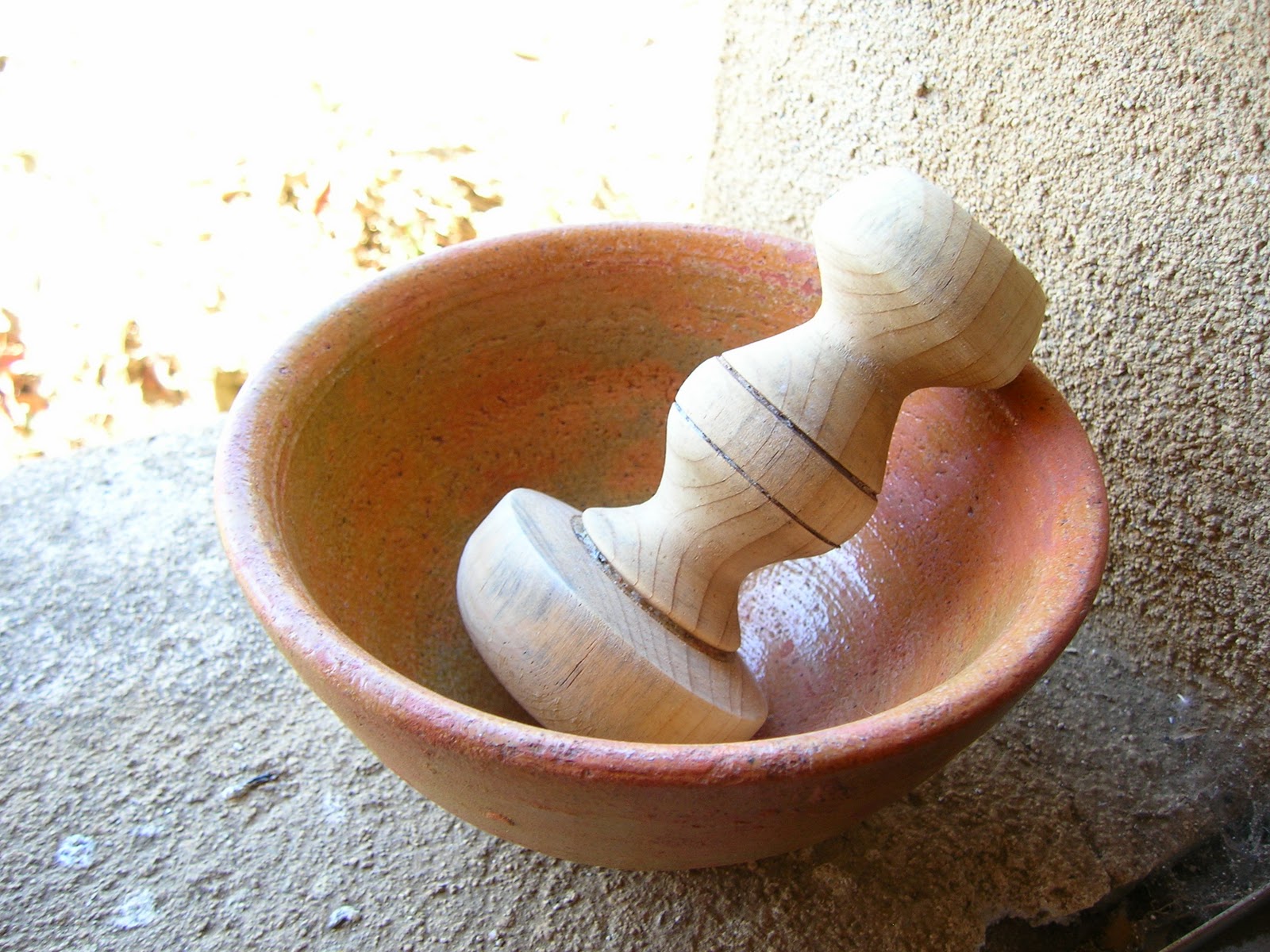
The women mashed the beans on the same piedra de moler where they prep their corn dough for tortillas.  You can do it however you want, just get them kinda paste-y (not liquid).

The women don't seem to have cutting-boards, or consider them necessary.  They are pros with wielding knives mid air.

No spoons for mixing for them, either... just kneading with their hands.

Pans over an open fire... forks instead of spatulas.


Filomena showing off some of the burgers once cooked.

Ingredients:
Black Beans (one can)
Oatmeal (3/4 cup)
Egg (one or two)
Garlic (3 small cloves)
Onion (one small onion, diced)
Carrot (1/2 cup shredded)
Bell Pepper (diced)
Salt (to taste)
Pepper (to taste)
Oil (for sautéing)

Take half of beans and mash them into a paste, then add the other half.  Add the veggies and spices.  Scramble the egg and add.  Add oatmeal to reach desired consistency.  Form burger patties by hand… this takes some practice and the mixture sometimes needs some encouragement to stay together. 

Fry the patties in a small amount of oil in frying pan (just enough to keep it from sticking… this was a hard point to get across to the women).  Trying to flip the patties too soon may make them crumble apart.  They’ll still taste good, but will be harder to serve. 

All the proportions are guidelines only.  Trial and error is the best way to work out what combo makes things stick together best for you.  We haven’t tried radishes in there yet, but we bet they would be good in place of (or as well as) the carrots.  Also, for those of you who have access to them, I’m sure leeks would be delicious!

Saturday, April 23, 2011

Crunchings and Munchings

Women in my town have a time-consuming trifecta of tasks that take up the bulk of their day: cooking, cleaning, and weaving. These are in addition to ongoing childcare, which is no small thing in any family, and is particularly impressive where families with upwards of 10 children are not uncommon.  In this post I'll tackle Cooking.  

~~~~~~~~~~~~~~

o
One of the "estufas mejoradas" that many international aid organizations help to get into communities around Guatemala.
Since I've already spent some time on food in other posts, I won't delve into what the women in my town cook, but I thought I'd look a bit at how they cook it. First of all, the majority of cooking happens over wood fired stoves here in my site. My host family has a gas stove they use as well as fire, but most families have just a wood stove. 

In other areas of the country there are families cook over an open fire, which is terribly inefficient as far as wood usage goes, and leads to loads of respiratory illness in families, particularly in infants strapped to their mothers' backs while the daily cooking gets done. Most families in my town have an estufa mejorada (improved stove), which really increased the burning efficiency of the stove, and decreases the amount of smoke and pollution inside the house.  

Grilling outdoors, more for tradition than taste, in this case.  This was a soup for Day of the Dead and so even though it was in a pot and probably didn't absorb much flavor from the flame, it just couldn't be done indoors on a gas range.
Just like in the U.S., there are opinions over what method of cooking tastes best, and sometimes people choose to grill over an open fire anyway. Who doesn't want barbecue now and again? There are plenty of people who could cook on a gas stove and choose not to because they think it changes the flavor of what they're cooking.

This is one of the places that sells firewood in town... this pile gets brought in and then mostly decimated on a weekly basis. Notice the wheelbarrow in front of the stack... it might help give a sense of scale.  
Even with the estufas mejoradas in town, cooking meals over flames three times a day leads to using a lot of firewood.  Deforestation is definitely a problem.  When I went for a hike up the ridge with my host family a while back, it was clear that all the remaining trees had been limbed up far above the height of a Guatemalan.  Any lower branches had long since been cut off for firewood.  The majority of the firewood sold in my town doesn't come from anywhere nearby -- it's cut down up in Quiche, which is two departments away (like states in the US) and brought in.  There really aren't any native forests left to speak of where I am. There are some trees up on the ridge lines and clinging to the very steepest of hillsides where farming is impossible.

So, I'd say that cooking is time intensive for the women, health intensive for the families, and resource intensive for the land. Obviously there are downsides to cooking with natural gas or electricity as well, but it seems that the forests in Guatemala have not been managed with sustainability in mind. My knowledge of land use policies in Guatemala is very limited, so I'm speaking strictly from my own observations. However, it appears that what could be a renewable resource here is being used faster than it can be replenished.  

Tuesday, March 22, 2011

Guatemalan Cuisine: Eggs and Tomatoes

The drama of Guatemalan Cuisine is like an ensemble cast miniseries. The story is mostly about the ongoing chattering and even bickering of the characters, but it's nice to have a little romance on the sidelines to keep things interesting. Eggs and Tomatoes might be considered the B plot romance. They often come as a pair, and add substance and flavor to any episode/meal in which they appear. They can each take on many forms, and can push a meal over from being a bit ho hum and into pretty satisfying territory.

Tomatoes here aren't really eaten fresh (well, almost nothing is, actually).  They usually make their appearance in chirmol, a tomato based salsa that is made and consumed for each meal -- it's not purchased, and it's not stored.  The process begins by roasting a handful of tomatoes, sometimes on the comal where tortillas are cooked, sometimes in the coals of a fire.  They are peeled and then mashed.  Lime and Cilantro are pretty obligatory ingredients, and sometimes a bit of onion or garlic sneaks its way in as well (although Guatemalans don't seem to care for garlic all that much).  It's not a spicy dish, it just adds some moisture and tang to whatever it's served over.  Which, can be most anything.  Eggs, dobladas or empanadas, beans, rice, potatoes, any of the staples.


These tomatoes went into the coals after cooking on an open fire out in the courtyard.

Here's my machucador for mashing tomatoes, and other sauces.

Eggs make an appearance on Guatemalan tables far more frequently than does meat.  In eating with my host families during training and the first few months at site, I probably ate at least one egg a day.  Sometimes it was an egg cooked in soup for dinner.  Sometimes a scrambled egg with tomatoes and onions thrown in for breakfast.  Sometimes a fried egg with chirmol on top, accompanied by black beans and tortillas.

My favorite egg dish quickly became verduras envueltas (wrapped veggies).  My training host mother would whip this out for a lunch or dinner probably once a week, and I always had to hold back from taking a third helping.  It's more or less like a vegetable tempura, and she did it with green beans, cauliflower, and broccoli.  She separated the egg yolk from the whites, and used her electric beater to whip the whites until they were stiff.  Then she added the yolk back in and kept whipping it, so it was still fluffy but had the whole egg there.  Each hunk of cauliflower (or handful of greenbeans) was dipped in the eggy froth and fried in the slightly greased pan.  Once cooked, it was served with (you guessed it), chirmol on top, and on lucky days, a bit of queso fresco crumbled and sprinkled on top.

My site host family has "huevo de comal" in which they beat an egg, add cornflour, and then cook it on the comal as they would a tortilla.  It comes out somewhere between a pancake and a tortilla, and they serve it with chirmol as well.  And, of course, tortillas.


I get my eggs from the cooperative shop nearby;
sometimes brown, sometimes white, always loose in a bag.  

Now that I'm cooking for myself, I still use an egg or two a day.  I'd be concerned about cholesterol, but since I don't really eat dairy or meat in my site, I figure I'm probably not in too bad of shape.  I do a lot of eggs, beans, and tortillas meals, just like I had with my host families.  I haven't mastered how to make chirmol well, but I'm getting there.  I also have been breaking out some recipes from home as well.  I make corn crepes/tortillas about once a week, french toast when I decide to splurge on some bread, and I'm thinking about some egg salad sandwiches soon, too.

Sunday, February 20, 2011

I Like to Eat, Eat, Eat...

...Eepples and Beneenees...


Today I went to the market to replenish my food stores after my week away.  I usually avoid going to town on Sundays since it is the big market day and I just get overwhelmed with the crush of the crowd.  I didn't have much choice with bare shelves, so I waited for the afternoon since things would clear out a bit and headed over around 1:00.  By 2:00 I had purchased fruits and veggies from half a dozen stalls was headed back home with a full tote bag and a wallet about 16Q lighter (about $2).


The apple wasn't bought today, just cleaned today.

The haul:
Onions (2 lbs)
Carrots (a bag of 5)
Avocados (4)
Bell pepper (1)
Chile peppers (5)
Bananas (12 mini-sized)
Tomatoes (1 lb)
Potatoes (1 lb)


Other than price differences, eating produce here requires a few extra steps than those I took back home.  Things like bananas and avocados are easy; just peel, prep (if you care to), and eat.  Pretty much everything else goes through the three containers method.  One bucket to scrub off visible dirt (using chorro water from the tap), ten minutes in the second bucket of chorro water with either bleach or a produce-specific cleaner added in, the third bucket for a quick rinse in bottle water.  

My veggie cleaner of choice
All this purification and hygiene work may seem a bit paranoid of me, and I know many volunteers who don't bother to go through the steps.  I also know some who have fallen sick with horrible digestive stuff from ignoring the precautions.

After all, in the US we just rinse off our produce and eat... not always bothering to rinse it.  However, there is the Clean Water Act in the US.  It's safe to drink tap water in the US (although many choose to filter it even so).  Produce is generally purchased in grocery stores or carefully beautified farmers market stalls.  Human waste goes through wastewater treatment plants in the US.  There are FDA inspectors that check over our food supply.  And yet, there are food recalls and food poisoning problems in the US, too.

Here, the water may be fine, but it may not be.  Sometimes water comes from a spring, but it may come from the river, and who knows what is happening upstream.  Since livestock are found throughout the town between houses and latrines are the human waste disposal system of choice, there are plenty of accessible sources of the dreaded FOC (fecal-oral contamination) to be spread around by flies.  Stalls in the market may store food in baskets or tarps on the ground, close to litter and feces and bugs.  Naturally, it's a buyer beware environment and I watch how people set up their stalls when I choose where to buy.  Still, for me, I don't mind an extra ten or twenty minutes of extra precaution.

The rub is, most of the Guatemalans in my community don't go through these steps.  One more factor contributing to chronic malnutrition.  It's hard for your body to absorb nutrients when your GI is doing its best to evacuate whatever nastiness hitchhiked its way in with your food.  One thing I'm hoping/planning to do is work with the local health post to see if we can raise awareness of the issue, and improve access to the means to remedy it.  Here's hoping!

Too Many Lentils

A few weeks ago I tried a new recipe for lentil burgers with a friend.  In the prep, I measured out two cups of uncooked lentils into the pan, while the recipe called for two cups of already cooked lentils.  Turns out lentils about triple in size.  Whoops.

As I prepared to get out of town last week I realized I had an odd assortment of things left in my fridge.  So, I made an experimental Lentil Soup that turned out pretty darn well.  Among other things, Peace Corps is teaching me to let go of absolute recipes (my sister ought to be so proud, she's never followed a recipe straight through in her life).  Turns out things can taste pretty good when just thrown together, so long as you have that always helpful sauce of Hunger.

I honestly don't remember exactly what all went in or what proportions, so I'm going to try to let you know more or less what I had on hand.  Feel free to do what I did -- improvise.

Ingredients:
Garlic (3 cloves)
Onions (one?  two?  don't remember)
Vegetable Oil (a good splash)
Carrots (two)
Lentils (a few cups... not sure how much I had)
Ham (in my case, left over lunch meat)
Tomato (one last lonely tomato in my basket)
Potato (ditto)
(I didn't have any celery, but I bet it would be a good addition)

Season to taste with:
Salt
Pepper
Ginger
Oregano
....anything else that sounds good.  I just went with what was available.


I threw the oil, garlic, and onions in first, shortly followed by the carrots and potatoes.  Since my lentils were already cooked, they got to head in later... if you're starting with dried lentils I'd guess they'd have to be right up there with onions and would take a fair bit of time on their own.


I got so busy throwing things in that I didn't take photos of the intermediate steps.  Suffice it to say that the tomatoes and ham went in toward the end, and the spices were thrown in throughout to taste.


It didn't turn out all that beautiful to look at, but it was tasty, filling, and emptied out the cupboard!  I highly suggest it next time you're just too lazy to go grocery shopping, or if you need to get out of town like I did.  Crusty bread in place of the club crackers would have been divine, but I'll have to wait for that addition another 21 months or so.  

~~~~~~~~~~~~~~

Cultural note:  Lentils are definitely not a Guatemalan staple.  I found these in a store in Xela, and haven't seen them in any of the local markets.  At the same time, the concept isn't so far away from beans, so it seems like if they were more widely available it would be an easy thing for Guatemalans to embrace.  

Whirlwind.


I've been travelling.  Here's what happened:

Friday 11th:  6 month anniversary in Guatemala!  Rode to Antigua in a chicken bus seated uncomfortably close to a man with an impressive curly mullet.  No pictures, sorry.

Saturday 12th:  Climbed my second volcano in country (Pacaya!) with about half the PCVs who swore in with me.  We roasted marshmallows at the top (from heat escaping from a crack in the earth) and hiked down in the dark with headlamps.  

Sunday 13th:  Got my first hair cut in country... I figure I ought to do it at least once every six months right?  Also, we went out on the town in the most ugly PACA (second hand clothes exported from the US) finds perhaps ever worn out in public.

Monday 14th:  Day one of Reconnect.  Ended up being a mixture of processing and venting in our tech groups.  Got a calidad Valentine's gift in our PCV Valentine exchange... the Wrinkle In Time books!  

Tuesday 15th:  Day two of Reconnect.  Focus group on how training had gone in the morning, and a pizza lunch and Q&A session with the US Ambassador to Guatemala.  

Wednesday 16th:  Woke in what felt like the Twilight Zone.  Since I was participating in a workshop looking at redesigning the PC Sustainable Agriculture program in Guatemala, I was staying in a hotel with hot water coming out of the tap!  Total reality shift.

Thursday 17th: Finished up the workshop, feeling like I shouldn't eat for the rest of the month after not having turned down a single morsel for the previous 48 hours.  I feel I was victim of the "now or never" mentality.  I don't know when I've eaten that well.

Friday 18th:  Worked on some planning for the internal Ag Magazine for PC Guatemala with some other PCVs, then headed back to site.  It's good to be home!


Sunday, January 30, 2011

Making a House a Home

This weekend I had my first house guests, as I had a mini cottage warming party with four good PCV friends. I've been in my new place just over a month, and the work back in November and December sweeping, disinfecting, and adding fresh coat of paint certainly helped brighten the mood.  Moving in was a relief, and my kitty (to be profiled later) helped make the place feel lived in.  Still, there's nothing like some good laughter and companionship to make a place feel really one's own.  

Friday two of the crew arrived and we made mango curry for dinner.  Breakfast the next morning was pancakes and hash-browns.  Once the other two arrived, we hiked up to the cemetery to enjoy the view and a picnic of granola-tacos (tortillas with peanut butter, granola, and honey inside: delightful).  After a trip to the neighboring town to pick up supplies, we entertained ourselves by producing large and scrumptious meals for dinner (tostadas with spicy bean dip and mango tomato salsa, home made macaroni and cheese) and breakfast (french toast with mango sauce, hash-browns, scrambled eggs).  

We probably spent most of our weekend preparing, consuming, and cleaning up after our culinary adventures, with a movie huddled around my laptop thrown in for good measure. I suppose the opportunity to pool our resources and eat some gringo food after all those beans and tortillas was too good to pass up.  Last night we had three in my bed (plus one cat), and two on a futon-ish mattress on the floor with sleeping bags and shared blankets for a cozy night indeed.  

On the way down from the cemetery we found some wheat just after harvest (a fairly uncommon crop) and played farmhand for a photo.  (Our 5th companion is taking the photo, of course).
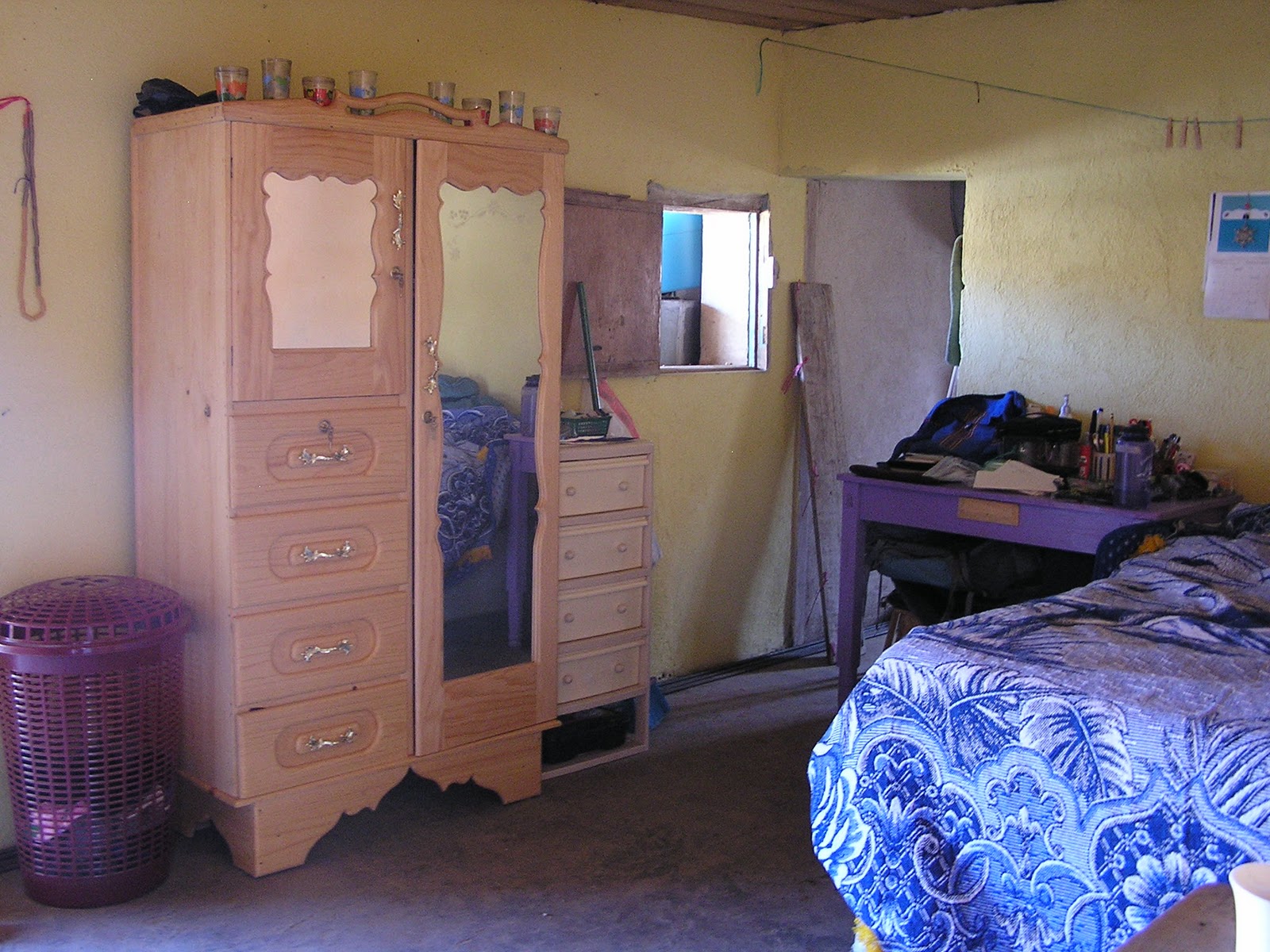
Below are the long promised shots of my pleasant little place, well spruced up with the many items I was able to buy for a one-price-fits-all screaming deal off another volunteer who ended up leaving Guatemala early.  Many times over the weekend I was asked "where'd you buy this?" and I would respond, "I inherited it..." to my companions' increasing envy.  The shots start in my cooking corner and rotate clockwise around the room (skipping the doorway).  

Kitchen.  Where the magic happens.

Rest of kitchen, and mud room... er... bench.

Wardrobe, bath, and laundry room area. 

Bed.  Not made due to a sleeping feline.  Please excuse.  

Office + Refrigerator space.
Look!  I have a microwave!  Not something I'd ever have imagined in Peace Corps or considered purchasing for myself, but since it came with the rest of the furniture.... I mean, I didn't even have one of these in the states for a good while there!  I think I've used it four times, so far.
The room is pretty spacious, and allows me to feel like I have a separate sleeping area from cooking, with my little office-y spot in between.  The door behind the oven leads to the grandfather's office (but we don't use that door, clearly), and the door to the left of my bed leads to a storage room that I don't have rights to use.  I just keep the door open to let a little more natural light through from the other little window.

Wednesday, December 29, 2010

To Make a Tamale

In mid December, Tia Cata had a big party to break in her new building / party room that had just finished with construction.  For this party, Ela was recruited to make 400 tamales, to feed the horde after the church service wound down.  This was a several day process to prepare, and I did my best to document each step.  I missed a good chunk of preparation of the recaldo (sauce) because the family dog bit me and I had to head to the doctor for an anti-rabies shot, but that's a story for another day.  

Anyway, here are the steps I was able to follow.  I apologize that I don't have the actual quantities available, but none of you need to make this in quantities of 400, I suppose.  Besides, I think it's mostly made to taste... a handful of this, a few pounds of that.... you get the idea.

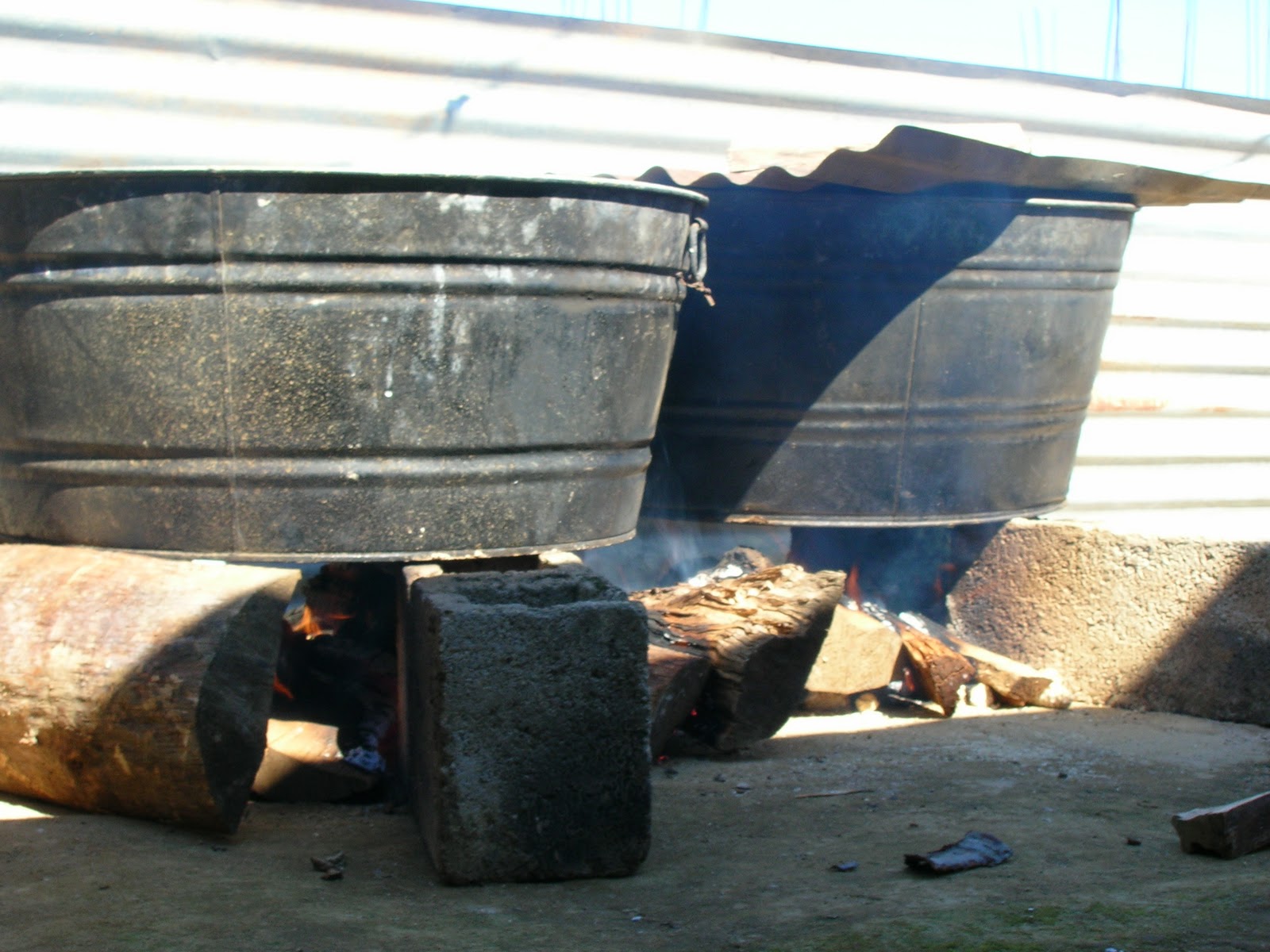
For such quantities, a makeshift cook space was made.  Cement blocks raised the metal basins off the fire, and a fence of lamina  was set up to shelter the flames from wind.

As with most things, the process started with corn.  On Thursday it was set to nixtamal, or soak in limestone and water to soften the kernels enough to take them to the molina (grinder / mill).  

After cooking the corn it gets taken to the mill (the next day, Friday morning).  Here I get hazy, but I think they cook it again with water added, as well as some cooked rice (a relatively small portion of the total) to make it more smooth and white.    

Ela then strained the liquid to take out all the bits of grit from the corn kernels.

Lots of consome (bullion, I think... some kind of powdered broth), margarine, and salt were added in (with many a taste test to be sure the balance is just right).  

And it returned to the fire, for constant stirring.

We started to take turns as the masa thickened and made stirring more tiring.

Finally, it began to boil like the mud pits in Yellowstone.

When we could drop a glob into cold water and have it keep it's shape, we knew it was ready.
Here's the sauce.  I missed the making of this goodness, but Ela told me it's loads of tomatoes, some red bell peppers, two kinds of ground pepper, cinnamon, and a little chocolate.  They must have taken this to the mill too, because I don't want to think how many blenders full this would have been.  I think it was strained as well, because I didn't find any seeds.

Ela removed the chicken skin and chopped the meat into chunks, cutting right through the bone with a knife reinforced by a wooden bat to give a little extra force when needed.

And it landed in yet another big tub.

While Ela was on meat duty, she had a neighbor girl cut exactly 400 strips of bell pepper.  That was how we kept track of when we met our goal.

Meanwhile I counted out 865 raisins by hand, to find out how many we had, and thus how many could go in each tamal.  I know there was an easier way to do this... perhaps count 50, weight them, and then estimate from there.  Too bad.  This is how we do it here.

Sorry the picture's blurry, I must have been too cross eyed to notice.   
Some leaves were washed and cut small to be the inner leaf; perhaps a plate sized option to remove the tamal from the main wrapping?

The main leaves had also been washed and had their stems removed.
At last, all the ingredients prepared (Saturday, day three of the process at this point...), we started to assemble.  The chicken was in the sauce, the masa cooled and doled out onto the waiting leaves....

...the decorative pepper and raisins placed just so....


...wrapped, folded, and stowed into another basin.
They return to the fire, with naked corn cob (stripped of kernals) and water in the bottom to prevent scorching and plastic on top to retain steam.  Two hours to go.  

At last, the fruits of our labor made it to a plate.

I have to admit, the "decorations" didn't make it look all that lovely...


....but the taste was great!  The texture was unlike any I've tried before; I wouldn't have said it was corn if I hadn't already known.  And, while there are other styles of tamales here that don't get strained and keep that cornmeal texture, this is the fancy party way.  
And that, folks, is the three day ordeal to generate 400 tamales.  Like I said, 50 for Noche Buena?  No sweat.  ...But this isn't something I want to whip out on a weekly basis.